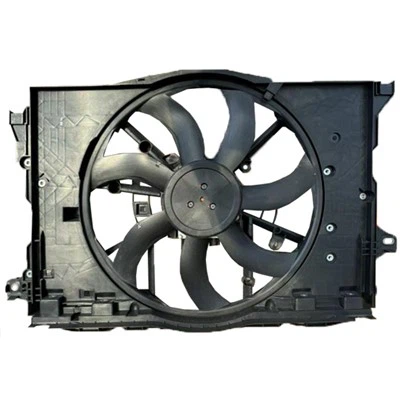
Factory strength
Our company has two injection molding workshops, two motor assembly workshops and one assembly workshop.The blades, motors and shrouds of our products are all made by ourselves.At present, our production capacity can reach 1000 pieces per day.
Our Certificate
IATF16949
Production Market
Our products have been exported to more than 40 countries around the world, and we have established pleasant and stable cooperative relationships with many customers.
Competitive Price
We offer competitive pricing and are an attractive option for businesses looking to save money without sacrificing quality.
What is Radiator Fan For Honda
Radiator fan for honda work by pulling or pushing air through a radiator. Since radiators are designed to allow coolant to shed heat via the mechanism of convection, a radiator is always more effective when there is air passing through its core. However, cooling fans are not responsible for the majority of airflow through radiators in most applications.during normal operation, the forward motion of a vehicle forces air into the front grill and through the radiator. This airflow can account for as much as 95 percent of the actual cooling that a radiator performs, and a cooling system that is operating properly typically doesn't even need a radiator fan when the vehicle is moving.
-
![Radiator Fan For ACURA TLX 2015-2020 190205A4H01 190305A2A02 190155A2A02]() Radiator Fan For ACURA TLX 2015-2020 190205A4H01 190305A2A02 190155A2A02Connect the HDS diagnostic instrument to the vehicle via the 16 pin OBD-II interface (located under the driver's dashboard)Ensure that the ignition switch is in the ON position (the engine can be
Radiator Fan For ACURA TLX 2015-2020 190205A4H01 190305A2A02 190155A2A02Connect the HDS diagnostic instrument to the vehicle via the 16 pin OBD-II interface (located under the driver's dashboard)Ensure that the ignition switch is in the ON position (the engine can be -
![Radiator Fan For HONDA ACCORD 2013-2020 190205A4H01 190305A2A02 190155A2A02]() Radiator Fan For HONDA ACCORD 2013-2020 190205A4H01 190305A2A02 190155A2A02The HONDA ACCORD 2013-2020 model adopts a dual fan design, with the main fan responsible for engine cooling and the auxiliary fan mainly used for air conditioning system cooling.
Radiator Fan For HONDA ACCORD 2013-2020 190205A4H01 190305A2A02 190155A2A02The HONDA ACCORD 2013-2020 model adopts a dual fan design, with the main fan responsible for engine cooling and the auxiliary fan mainly used for air conditioning system cooling. -
![Radiator Fan For HONDA ODYSSEY 2005-2010 19015RGLA01, 19020RGLA01, 19030RGLA01, 600850, HO3115128, HO3115128Q]() Radiator Fan For HONDA ODYSSEY 2005-2010 19015RGLA01, 19020RGLA01, 19030RGLA01, 600850,...The electronic fan system of the HONDA ODYSSEY 2005-2010 model adopts a typical dual fan design, consisting of two independent fans responsible for engine cooling and air conditioning system heat
Radiator Fan For HONDA ODYSSEY 2005-2010 19015RGLA01, 19020RGLA01, 19030RGLA01, 600850,...The electronic fan system of the HONDA ODYSSEY 2005-2010 model adopts a typical dual fan design, consisting of two independent fans responsible for engine cooling and air conditioning system heat -
![Radiator Fan For Hond Element 2.4 2007-2011 FA70801 CF18031 FA70801 38616P3G003 DORMAN:621-386]() Radiator Fan For Hond Element 2.4 2007-2011 FA70801 CF18031 FA70801 38616P3G003 DORMAN:...Application: Automotive Cooling System. Product Name: Radiator Cooling Fan. Brand Name: Neutral. OEM: FA70801 CF18031, FA70801 38616P3G003, DORMAN:621-386
Radiator Fan For Hond Element 2.4 2007-2011 FA70801 CF18031 FA70801 38616P3G003 DORMAN:...Application: Automotive Cooling System. Product Name: Radiator Cooling Fan. Brand Name: Neutral. OEM: FA70801 CF18031, FA70801 38616P3G003, DORMAN:621-386 -
![Radiator Fan For Hond Ridgeline 3.5L 2006-2008 2403-530588 38611RJEA01 CF18045 DORMAN:620275]() Radiator Fan For Hond Ridgeline 3.5L 2006-2008 2403-530588 38611RJEA01 CF18045 DORMAN:6...Application: Automotive Cooling System. Product Name: Radiator Cooling Fan. Brand Name: Neutral. OEM: 2403-530588 38611RJEA01 CF18045 DORMAN:620275
Radiator Fan For Hond Ridgeline 3.5L 2006-2008 2403-530588 38611RJEA01 CF18045 DORMAN:6...Application: Automotive Cooling System. Product Name: Radiator Cooling Fan. Brand Name: Neutral. OEM: 2403-530588 38611RJEA01 CF18045 DORMAN:620275 -
![Radiator Fan For Hond Pilot 3.5L 2009-2015 19015RN0A01 19020RGLA01 674-50499 674-50507 HO3115149 HO3115151 SBFHO3115149]() Radiator Fan For Hond Pilot 3.5L 2009-2015 19015RN0A01 19020RGLA01 674-50499 674-50507 ...1.We created the planning in step with the OE,meet the demand of aftermarket. 2.Our merchandise are tested by the market and meet the necessities of most markets. 3.Each of our parts is factory-made
Radiator Fan For Hond Pilot 3.5L 2009-2015 19015RN0A01 19020RGLA01 674-50499 674-50507 ...1.We created the planning in step with the OE,meet the demand of aftermarket. 2.Our merchandise are tested by the market and meet the necessities of most markets. 3.Each of our parts is factory-made -
![Radiator Fan For Hond Pilot 3.5L 2005-2008 2403-530545 38611P8FA01 CF18095 DORMAN:620262]() Radiator Fan For Hond Pilot 3.5L 2005-2008 2403-530545 38611P8FA01 CF18095 DORMAN:6202621.We made the design according to the OE,meet the demand of aftermarket. 2.Our products have been tested by the market and meet the requirements of most markets. 3.Each of our components is
Radiator Fan For Hond Pilot 3.5L 2005-2008 2403-530545 38611P8FA01 CF18095 DORMAN:6202621.We made the design according to the OE,meet the demand of aftermarket. 2.Our products have been tested by the market and meet the requirements of most markets. 3.Each of our components is -
![Radiator Fan For Prelude 2.2L 1999-2001 38611PAAA01 96184988 FA70642 DORMAN:620256]() Radiator Fan For Prelude 2.2L 1999-2001 38611PAAA01 96184988 FA70642 DORMAN:6202561.We ar the manufacturer and that we will turn out as long as you would like.. 2.We have long expertise in counter trade cooperation and ar ready to handle numerous emergencies.. 3.We can perform
Radiator Fan For Prelude 2.2L 1999-2001 38611PAAA01 96184988 FA70642 DORMAN:6202561.We ar the manufacturer and that we will turn out as long as you would like.. 2.We have long expertise in counter trade cooperation and ar ready to handle numerous emergencies.. 3.We can perform -
![Radiator Fan For Hond Prelude 2.2L 1999-2001 19030PT0003 CF18066 FA70634 DORMAN:620252]() Radiator Fan For Hond Prelude 2.2L 1999-2001 19030PT0003 CF18066 FA70634 DORMAN:620252Application: Automotive Cooling System. Product Name: Radiator Cooling Fan. Brand Name: Neutral. OEM: 19030PT0003 CF18066 . FA70634 DORMAN:620252
Radiator Fan For Hond Prelude 2.2L 1999-2001 19030PT0003 CF18066 FA70634 DORMAN:620252Application: Automotive Cooling System. Product Name: Radiator Cooling Fan. Brand Name: Neutral. OEM: 19030PT0003 CF18066 . FA70634 DORMAN:620252 -
![Radiator Fan For Acura RDX 2.3L 2007-2012 19030RWCA03 CF18093 FA70730 DORMAN:621348]() Radiator Fan For Acura RDX 2.3L 2007-2012 19030RWCA03 CF18093 FA70730 DORMAN:621348Application: Automotive Cooling System. Product Name: Radiator Cooling Fan. Brand Name: Neutral. OEM: 19030RWCA03 CF18093 FA70730 DORMAN:621348
Radiator Fan For Acura RDX 2.3L 2007-2012 19030RWCA03 CF18093 FA70730 DORMAN:621348Application: Automotive Cooling System. Product Name: Radiator Cooling Fan. Brand Name: Neutral. OEM: 19030RWCA03 CF18093 FA70730 DORMAN:621348 -
![Cooling Fan For Acura TL 3.2L/3.5L 2004-2008 2403-530539 38611P8FA01 CF18044 DORMAN:620259]() Cooling Fan For Acura TL 3.2L/3.5L 2004-2008 2403-530539 38611P8FA01 CF18044 DORMAN:6202591.We are the manufacturer and we can produce as long as you need.. 2.We have long experience in counter trade cooperation and are able to handle various emergencies.. 3.We can carry out independent
Cooling Fan For Acura TL 3.2L/3.5L 2004-2008 2403-530539 38611P8FA01 CF18044 DORMAN:6202591.We are the manufacturer and we can produce as long as you need.. 2.We have long experience in counter trade cooperation and are able to handle various emergencies.. 3.We can carry out independent -
![Radiator Fan For HOND Acura TL 3.2L/3.5L 2004-2008 19030RDAA02 CF18026 FA70732 DORMAN:620248]() Radiator Fan For HOND Acura TL 3.2L/3.5L 2004-2008 19030RDAA02 CF18026 FA70732 DORMAN:6...Each client we've an expert employees to contact, they will be liable for the process of orders and after-sales service.What does one got to raise you'll directly contact the corresponding
Radiator Fan For HOND Acura TL 3.2L/3.5L 2004-2008 19030RDAA02 CF18026 FA70732 DORMAN:6...Each client we've an expert employees to contact, they will be liable for the process of orders and after-sales service.What does one got to raise you'll directly contact the corresponding


- Benefits of Radiator Fan For Honda
High-efficiency
The two cooling systems are air cooling via the computer cooling fans or the liquid complex systems, are counterproductive. These have a high thermal conductivity which means the heat diffusion through the various components is at a higher rate. Both liquid or air cooling let your systems operate at an optimally cool temperature that is consistent. A fan typically only kicks into gear as the computer overheats.
Faster cpu and gpu performance
Internal fans used in PC or laptops support faster speeds for improved overall performances. Internal system fans are connected to the CPU or GPU heat sink. The two biggest heat-producing components produce enough heat that puts the systems at risk of damage due to overheating. Cooling systems(i.e. Fans connected internally) produce enough heat to cope with the faster computer hardware that tends to produce more heat thus saving the systems from damage.
Lowering ambient temperatures
The computer operating temperatures are affected by the environmental or ambient temperatures that might deteriorate the working conditions in which the systems work. The rise in the temperature that accumulates around the device tends to be the main cause of disruption due to overheating. Here devices including the laptops have external cooling pads equipped with cooling fans that keep the ambient temperature down without requiring any modifications to the device's hardware.
Improve airflow and allow streamlined cooling
The cooling systems deployed in modern-day technology bring into focus the right kind of airflow streamlining. The positioning of these cooling systems on a hard, flat, or non-fabric surface tends to cool the enclosure systematically. The use of the four walls of the device for an air-intake source cools the systems obstructing the flow that could prove hazardous. This process of the hot air regulation and replacement with the cooler one proves significant in driving the best working conditions in and around the PCs.
Application of Radiator Fan For Honda
Computer field
During the operation of the computer, due to the increase in CPU processing speed, the heat generated is also increasing. If the heat cannot be dissipated in time, it will cause the computer to crash, restart, etc. Therefore, it is necessary to use cooling fans in computers to help dissipate heat. Cooling fans can usually be installed on the CPU radiator to help dissipate heat by generating airflow to ensure the normal operation of the computer.
Mobile phone field
During the use of mobile phones, a large amount of heat will also be generated due to the use of batteries, CPU and other devices. If the heat cannot be discharged in time, it will cause problems such as overheating of the phone and shortened battery life. Therefore, the application of cooling fans in smartphones has become a very popular solution.
Automotive field
As the output power of automobile engines increases, the temperatures of engine oil and water will gradually increase. If they cannot be discharged in a timely and effective manner, it will cause serious damage to the engine. In this case, the cooling fan has become an indispensable and important component of the engine.
Industrial equipment field
In industrial equipment, since the operation of the equipment requires a large amount of electrical energy, this energy will be converted into heat energy inside the equipment. If it cannot be dissipated well, it will cause the equipment temperature to be too high, causing equipment burnout, shutdown and other problems. Therefore, cooling fans are also a very important part of industrial equipment.
Mechanical radiator fan
This type is belt-driven, much like many other car components and accessories today. Mechanical fans turn faster than electric ones at higher speeds but slow down when the engine runs at lower RPMs. That means high-powered engines can heat up a little too quickly when idling or driving slowly if they rely on mechanical fans.
Electric radiator fan
This type gets power from the car's electrical system, turning at the same speed whether the engine runs at low or high RPMs. They're faster than mechanical fans at low RPMs, but they can't move as much air as when the vehicle drives at much higher speeds.
Besides the power type, radiator fans also differ in the number of fans included in the system. That means they can be either one of the following.
Single radiator fans
Regardless of their type, single radiator fans are typically good enough for most stock vehicles. They'll get enough air through the radiator to prevent overheating and keep your engine within safe operating temperatures.
Dual radiator fans
You can probably guess that this type has two fans instead of just one. They're better for vehicles that have been upgraded and have engines that run hotter than usual. Dual radiator fans will drive much more air through the radiator, enhancing its cooling capabilities.
OEM radiator fans
These are radiator fans produced by OEM manufacturers according to the carmaker's specifications. Firstly, they tend to be more durable and last longer than any other kind of fan. Secondly, a compatible one will fit your car brand and model much better, too.
Aftermarket radiator fans
You can also find aftermarket ones that fit specific models or even universal radiator fans. These fans are often cheaper, don't last long, and might not fit perfectly into your engine bay. However, there are always some exceptions – just look around for well-designed fan models. You can expect those to cost a pretty penny, maybe even more expensive than OEM fans.
Signs of a Radiator Fan For Honda Assembly in Need of Replacement
Engine Overheating
When the radiator fan isn't functioning properly, it is not able to adequately cool down the car's engine. This is problematic for a number of reasons. First, the engine can sustain damage that will lead to further repair work; second, the engine can overheat; and third, the car can be rendered undriveable until the problem is fixed.
Air Conditioner Function Diminished
When the temperatures outside are high, the car needs to work harder to cool the engine, but it's also probable that the air conditioning fan is also on, both of which borrow power in order to function well. If the radiator fan is struggling, it can drain the AC fan of its power, leading to poorer AC functioning.
Loud Noise Coming From Radiator Fan
If the radiator fan assembly is broken in any way, it will likely produce a concerning noise. It's important to be aware of how your car performs, which includes any odd noises coming from the engine bay. Your trusted automotive specialist will be able to detect this noise, especially if you bring it to his or her attention beforehand.
Fan frame fan blades
The frame and fan blades are generally made of PBT. The main advantages are that it is relatively affordable, environmentally friendly, fireproof, corrosion-resistant, and durable, so it is cost-effective. Some products also require the use of metal materials to make fans and frames, such as AC fans or high-power DC fans. Fan accessories can be made using aluminum alloy castings or A3 molding processes.
Bearing system
At present, fan bearings include ball bearings, oil bearings, hydraulic bearings, etc. Fan manufacturers generally select bearings based on the use of the product and the customer's acceptance of the product cost.
Pcb
The substrate, also called the circuit board, is usually made of flame-retardant board, and the surface is protected.
Electronic enameled wire
Generally, pure copper is required. In order to reduce costs, some manufacturers sometimes choose copper-clad aluminum enameled wire. However, due to the different materials and temperature characteristics of copper-clad aluminum enameled wires, separation of copper and aluminum will occur after multiple hot and cold cycles, resulting in coil damage. Please do not use copper-clad aluminum enameled wire for general electrical appliances.


Silicon steel sheet
Generally, silicon steel with a thickness between 500 and 800 and a thickness between 0.25 and 0.5 is selected. The more material and thinner the thickness, the better the performance of the silicon, the lower the temperature rise of the motor, the higher the magnetic permeability, and the higher the power density.
Magnetic materials
Includes magnetic strip and magnetic frame. General choices for rubber magnetic materials, injection molded magnets, ferrite, boron and other magnetic materials. Consider your options based on a variety of factors, including product power size, temperature range of operating conditions, and product cost acceptance. Low-cost rubber belts are often chosen for micro-brushless DC cooling fans.
Electronic components
It mainly includes electronic components such as Hall sensors, logic control chips and power units.
Axis
The radiator core is generally made of copper, and lead or aluminum alloy materials can be used in situations where the requirements are not high; the fan blade shaft materials are mainly iron, aluminum and plastic.
How to Choose Radiator Fan For Honda
Understand where and how much heat is being generated
Before you can begin the process of selecting a fan, you must understand how much heat your system is generating. Components such as microcontrollers, processors, FPGAs, and MOSFETs are often the heaviest consumers of power and, hence, the prime culprits for significant heat dissipation. These components can create hot spots within the system. However, it's possible to model the resulting thermal profile, either with a number of distributed thermocouples or more accurately using computational fluid dynamics (CFD) (Fig.1).
Determine the airflow needed to keep the temperature rise in check
Component performance and reliability can be dramatically impaired when operating at higher temperatures. Even though a device will normally have a specified operating temperature range, it's often desirable to keep the actual operating temperature well below the upper limit of that range. Therefore, to determine what airflow (Q) will be required to ensure that component temperatures stay within an acceptable range, we first need to determine an allowable temperature rise (ΔT).
Find a fan that meets the airflow requirement
Next, we need to understand the airflow impedance of our system. Normally, fan manufacturers specify airflow for a given static pressure, i.e. the atmospheric pressure in the enclosure when there's no air flow. As airflow varies inversely with static pressure, manufacturers typically present the information using graphs.
Choosing the type of fan
The most common fan type is the axial fan. These can provide high airflow and are ideal for systems with relatively low static pressure since the air enters and leaves the fan in the same direction. Centrifugal fans expel air in a different direction, which has the effect of compressing the air. This may be helpful to overcome the higher static pressures encountered in some systems. Typically, though, such fans are only suitable for lower airflow requirements.
Final considerations
Fan noise, both acoustic and electrical, and speed control are other factors a designer may need to consider. Axial fans, especially larger diameter fans, will normally be quieter in operation than smaller fans that have to run faster to achieve the same airflow, and will certainly be quieter than a comparable centrifugal or blower-type fan.
The Functionality of The Radiator Fan For Honda Motor?
Cooling the engine
The motor is responsible for turning the fan blades, which are responsible for drawing cool air into the radiator and exhausting hot air from the engine compartment. In this way, the engine can be cooled and kept from overheating.
Regulating engine temperature
The radiator cooling fan motor is controlled by a temperature sensor that detects the engine's temperature and sends a signal to the car's computer. The computer then activates the motor, which turns on the fan blades to cool the engine. Once the engine has cooled to an appropriate temperature, the motor is deactivated, and the fan blades stop turning.
Preventing engine damage
An engine that is overheated can suffer serious damage, such as warped cylinders or a cracked engine block. In order to prevent engine damage, the radiator cooling fan motor is responsible for keeping the engine at a safe operating temperature.
How to Maintain Radiator Fan For Honda
Inspect and clean the radiator fan
Drivers should test the fan by opening the car hood, starting the engine, and setting the air conditioner to the highest temperature. At the same time, you should monitor the temperature gauge to make sure that the overheating motor does not overheat.If your radiator, both the main and the A/C radiator, is covered by dirt, the heat exchange process will be disturbed. As the consequence, the fan must spin almost continuously to cool the system. Cleaning the fan is a very important step. You can use the degreaser to remove all the dirt on the fan housing and also the blades.
Fan wiring and power supply
After cleaning every space of your radiator fan, please check the wiring and power supply. These are two types of positive and negative wires that provide power to the fan. Drivers need to unplug the lead from the fan and check the connector for damage, corrosion, or poor connection.
Check the car coolant
One of the simplest ways to make sure your fan isn't damaged is to inspect your coolant. This is very easy you can do to ensure your engine runs at the optimum temperature. Just open the hood and check the level of the coolant. This has min and max markers on it. The standard liquid level to help your fan work properly should be between these two levels.When all parts don't have abnormal signs, don't forget to diagnose the ECU unit. If it happens to your car, disassembling and dismantling the ECU is the necessary step. After that, you should inspect the internal board inside ECU and you can even clean it with oxides with alcohol.
Our Factory
Danyang Hongjiang Electric Co.,Ltd,which was originally built in 1995,is a specialized company in the development, manufacture and distribution of various heater assemblies and electric fan assemblies.Our company has two injection molding workshops, two motor assembly workshops and one assembly workshop.The blades, motors and shrouds of our products are all made by ourselves.At present, our production capacity can reach 1000 pieces per day.At present, the company has been able to produce more than 600 different types of electronic fan assemblies, covering most products of more than 30 internationally renowned automobile companies, including GM, Opel, Fiat, Toyota, Honda, Mazda, Mitsubishi, Hyundai and Kia,etc.


FAQ
As one of the most professional radiator fan for honda manufacturers in China, we're featured by high quality products and good service. Please rest assured to wholesale radiator fan for honda in stock here from our factory. Also, free sample is available for quality checking.
Radiator Fan For DODGE, Radiator Fan For K2, High Quality radiator fan for BrioPopular Products