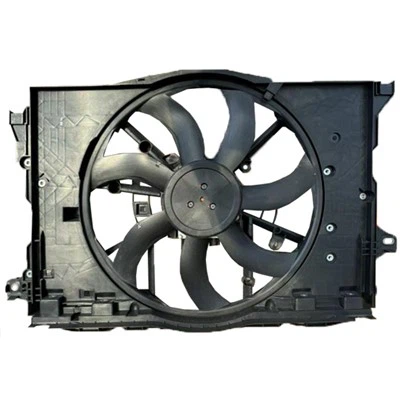
What is Radiator Fan For Toyota
The radiator fan for toyota is a type of fan used in automobiles to cool the radiator. By doing so, it helps with regulating engine temperature. It's, therefore, also known as the engine cooling fan and usually mounted between the radiator and engine. In some vehicles, the fan sits between the grille and the radiator.radiator fans are usually a set of blades attached to a hub. The assembly can be all metal or plastic, and often made into different designs. The blades are curved or straight, long or short, and so on. A car radiator fan can also be electric and spun by an electric motor or mechanical and powered by the engine.
-
![Radiator Fan For Toyota Scion XB 2008-2013 16361-28360 16711-28400 1636328400 1671128400 16361-28350 1636328390 1671228090]()
-
![Radiator Fan For TOYOT HILUX/REVO 2015 16711-0L140]() Radiator Fan For TOYOT HILUX/REVO 2015 16711-0L140Application: Automotive Cooling System. Product Name: Radiator Cooling Fan. Brand Name: Neutral. OEM: 16711-0L140
Radiator Fan For TOYOT HILUX/REVO 2015 16711-0L140Application: Automotive Cooling System. Product Name: Radiator Cooling Fan. Brand Name: Neutral. OEM: 16711-0L140 -
![Radiator Fan For TOYOT HILUX VIGO 2006 16711-0L050]() Radiator Fan For TOYOT HILUX VIGO 2006 16711-0L050Application: Automotive Cooling System. Product Name: Radiator Cooling Fan. Brand Name: Neutral. OEM: 16711-0L050
Radiator Fan For TOYOT HILUX VIGO 2006 16711-0L050Application: Automotive Cooling System. Product Name: Radiator Cooling Fan. Brand Name: Neutral. OEM: 16711-0L050 -
![Radiator Fan For TOYOT HILUX VIGO 05-14]() Radiator Fan For TOYOT HILUX VIGO 05-141.We ar the manufacturer and that we will turn out as long as you would like.. 2.We have long expertise in counter trade cooperation and ar ready to handle numerous emergencies.. 3.We can perform
Radiator Fan For TOYOT HILUX VIGO 05-141.We ar the manufacturer and that we will turn out as long as you would like.. 2.We have long expertise in counter trade cooperation and ar ready to handle numerous emergencies.. 3.We can perform -
![Radiator Fan For TOYOT HYRYDER 278915400105]() Radiator Fan For TOYOT HYRYDER 2789154001051.We created the planning in step with the OE, meet the demand of aftermarket. 2.Our merchandise are tested by the market and meet the necessities of most markets. 3.Each of our parts is factory-made
Radiator Fan For TOYOT HYRYDER 2789154001051.We created the planning in step with the OE, meet the demand of aftermarket. 2.Our merchandise are tested by the market and meet the necessities of most markets. 3.Each of our parts is factory-made -
![Radiator Fan For TOYOT HYRYDER 278915400105]() Radiator Fan For TOYOT HYRYDER 278915400105Application: Automotive Cooling System. Product Name: Radiator Cooling Fan. Brand Name: Neutra. lOEM: 16361-28360, 16711-284001636328400, 167112840016361-28350, 16363283901671228090
Radiator Fan For TOYOT HYRYDER 278915400105Application: Automotive Cooling System. Product Name: Radiator Cooling Fan. Brand Name: Neutra. lOEM: 16361-28360, 16711-284001636328400, 167112840016361-28350, 16363283901671228090 -
![Radiator Fan For Toyota Scion TC 2.4L 2005-2010 16361-22051 16363-23010 16711-28170 1636328210 16361-28081]() Radiator Fan For Toyota Scion TC 2.4L 2005-2010 16361-22051 16363-23010 16711-28170 163...Application: Automotive Cooling System. Product Name: Radiator Cooling Fan. Brand Name: Neutral. OEM: 16361-22051,16363-23010
Radiator Fan For Toyota Scion TC 2.4L 2005-2010 16361-22051 16363-23010 16711-28170 163...Application: Automotive Cooling System. Product Name: Radiator Cooling Fan. Brand Name: Neutral. OEM: 16361-22051,16363-23010 -
![Radiator Fan For Sienna 3.0L 1999-2003 167110A070 16361-0A090 16363-20050 16711-0A070 163610A090 1636320050 TO3115121 TO3115121Q]() Radiator Fan For Sienna 3.0L 1999-2003 167110A070 16361-0A090 16363-20050 16711-0A070 1...1.We are the manufacturer and we can produce as long as you need.. 2.We have long experience in counter trade cooperation and are able to handle various emergencies.. 3.We can carry out independent
Radiator Fan For Sienna 3.0L 1999-2003 167110A070 16361-0A090 16363-20050 16711-0A070 1...1.We are the manufacturer and we can produce as long as you need.. 2.We have long experience in counter trade cooperation and are able to handle various emergencies.. 3.We can carry out independent -
![Radiator Fan For Sienna 3.0L 1998-2003 163610A090 1636320060 312-55019-101 610470620-536 674-58835B TO3115126]() Radiator Fan For Sienna 3.0L 1998-2003 163610A090 1636320060 312-55019-101 610470620-53...1.We created the planning consistent with the OE,meet the demand of aftermarket. 2.Our merchandise are tested by the market and meet the necessities of most markets. 3.Each of our elements is
Radiator Fan For Sienna 3.0L 1998-2003 163610A090 1636320060 312-55019-101 610470620-53...1.We created the planning consistent with the OE,meet the demand of aftermarket. 2.Our merchandise are tested by the market and meet the necessities of most markets. 3.Each of our elements is -
![Radiator Fan For Sequoia 5.7L 674-50501]() Radiator Fan For Sequoia 5.7L 674-50501Application: Automotive Cooling System. Product Name: Radiator Cooling Fan. Brand Name: Neutral. OEM: 674-50501
Radiator Fan For Sequoia 5.7L 674-50501Application: Automotive Cooling System. Product Name: Radiator Cooling Fan. Brand Name: Neutral. OEM: 674-50501 -
![Radiator Fan For Sequoia 4.7L 2001-2007 S:88454-0C010 884530C010 884540C010 884540C011 884540C020 8855034010 DORMAN:620548]() Radiator Fan For Sequoia 4.7L 2001-2007 S:88454-0C010 884530C010 884540C010 884540C011 ...Application: Automotive Cooling System. Product Name: Radiator Cooling Fan. Brand Name: Neutral. Material: PA66
Radiator Fan For Sequoia 4.7L 2001-2007 S:88454-0C010 884530C010 884540C010 884540C011 ...Application: Automotive Cooling System. Product Name: Radiator Cooling Fan. Brand Name: Neutral. Material: PA66 -
![Radiator Fan For Toyota Land Cruiser'2007 8859060030]() Radiator Fan For Toyota Land Cruiser'2007 8859060030Application: Automotive Cooling System. Product Name: Radiator Cooling Fan. Brand Name: Neutral. OEM: 8859060030
Radiator Fan For Toyota Land Cruiser'2007 8859060030Application: Automotive Cooling System. Product Name: Radiator Cooling Fan. Brand Name: Neutral. OEM: 8859060030


Benefits of Radiator Fan For Toyota
Efficiency
Radiator Fan For Toyota are more efficient than mechanical fans because they can be controlled based on the engine's temperature. This means they only operate when needed, reducing strain on the engine and saving energy.
Multiple Speed Options
Radiator Fan For Toyota can be designed with multiple speed options, allowing them to operate at different speeds depending on the cooling requirements. This versatility enhances their cooling capabilities.
Compact Size
Radiator Fan For Toyota are generally more compact than mechanical fans, making them easier to fit into tight engine compartments without obstructing other components.
No Electrical Power Consumption
Radiator Fan For Toyota do not draw electrical power from the engine, which can be beneficial in certain situations where conserving electrical power is crucial.
Application of Radiator Fan For Toyota
Computer field
During the operation of the computer, due to the increase in CPU processing speed, the heat generated is also increasing. If the heat cannot be dissipated in time, it will cause the computer to crash, restart, etc. Therefore, it is necessary to use cooling fans in computers to help dissipate heat. Cooling fans can usually be installed on the CPU radiator to help dissipate heat by generating airflow to ensure the normal operation of the computer.
Mobile phone field
During the use of mobile phones, a large amount of heat will also be generated due to the use of batteries, CPU and other devices. If the heat cannot be discharged in time, it will cause problems such as overheating of the phone and shortened battery life. Therefore, the application of cooling fans in smartphones has become a very popular solution.
Automotive field
As the output power of automobile engines increases, the temperatures of engine oil and water will gradually increase. If they cannot be discharged in a timely and effective manner, it will cause serious damage to the engine. In this case, the cooling fan has become an indispensable and important component of the engine.
Industrial equipment field
In industrial equipment, since the operation of the equipment requires a large amount of electrical energy, this energy will be converted into heat energy inside the equipment. If it cannot be dissipated well, it will cause the equipment temperature to be too high, causing equipment burnout, shutdown and other problems. Therefore, cooling fans are also a very important part of industrial equipment.
Types of Radiator Fan For Toyota
Mechanical Radiator Fan
This type of engine cooling fan runs off the crankshaft and is commonly found in older vehicles types. It's commonly attached to the water pump pulley and only spins when the engine is running. But the fan must only come on when necessary. To enable that, a special type of clutch is used. The clutch engages and disengages the fan based on the cooling needs of the engine.The mechanical radiator fan has both good and bad sides. Being mechanical than electric, it's less prone to failure, plus you can easily service a failed one. It also packs a lot of power and can move large volumes of air to cool massive or modified engines.
Electric Radiator Fan
These car cooling fans do not depend on the engine to operate. Instead they use a small electric motor. Alongside the motor, an electric cooling fan comes with a wiring system to support its operation. The system consists of wires, connectors, fuse, relay(s), sensors, and control module.Electric fans offer many benefits, and are considered the best fans for cars. One of them is their compact size, which allows them to install in tight places. An electric radiator fan also offers the advantages of control. Using sensors and ECUs, the fan can be made to only come on when needed. It can also be made to spin at a specified speed, which offers a higher degree of efficiency.
Single Radiator Fan
As the name indicates, a single radiator fan is a one-fan assembly. It's the most common configuration and used in many different types of cars. A single radiator fan is not suitable for some applications, though. These include large engines that require a lot of air to take away the heat produced. Modified engines, too. In such situations, an assembly consisting of two fans is often used.
Dual Radiator Fan
The dual radiator fan is a set of two fan assemblies. They are usually used for electric fans and when the engine is large and cooling needs higher. For that reason, these types of cooling fans are most common on large vehicles or those with modified engines. The setup allows more air through the radiator core for a more effective cooling effect.
Radiator Fan Components

Blade Assembly
The main (and most visible) part of a radiator fan is the blade assembly. It typically consists of arms attached to a hub. The function of the blades is to blow air through the radiator core when the fan comes on. The amount of air moved by the blades is usually indicated in CFM or cubic feet per minute.Radiator fan blades are made from different materials. They can be steel, aluminum, or even plastic. They also differ in many ways such as number, length, pitch, and more. The blades can be long or short depending on the application and required performance.
Motor
This is basically a 12V DC motor and only used on electric radiator fans. The purpose of the motor is to rotate the blades and cause them to move air. One of the features that vary with cooling fan motor designs is the size and shape. But in spite of these design differences, the motor contains the usual components.A typical radiator fan motor consists of a housing, permanent magnets, armature and commutator held on a shaft, and brushes on an end plate. The assembly is then attached to the fan blade assembly and bolted to the fan frame for support.


Clutch
The radiator fan clutch is only used in mechanical cooling fans. It's usually a type of device designed to engage and disengage the fan. Different mechanisms are used to achieve that, and the clutch can be thermally operated or non-thermal. Most cooling fan clutches are thermal. They depend on a temperature sensitive device to engage the fan or allow it to free wheel.
Shroud
Many radiator cooling fans today feature a shroud. This shroud is a metal or plastic housing around the fan assembly. Its main function is to direct air to the radiator and prevent losses. That way, the shroud helps to make the cooling fan more effective. The radiator fan shroud can be one piece or split into two. It also either comes with the fan or separately to be installed by the user.

Mechanical or Electric
The first question to ask yourself is whether you need a mechanical or electric radiator cooling fan. Mechanical fans are further classified as clutch or flex type. Generally, you should go for a cooling fan that replaces the older one, unless if considering to upgrade to a better fan. Choose a mechanical fan for stock or slightly modified engine and electric for high horsepower or highly modified engine.
Single or Dual Fan
Most engines will do with a single fan. If you have installed a larger engine, added a turbo charger or supercharger and other modifications, a dual setup is better than a single fan. You need more air, which one fan may not produce. If considering a dual cooling fan configuration, ensure you have enough space. Some car will only have enough room for one fan. Dual configurations are also normally possible with electric radiator fans.
Push or Puller Fan
A radiator fan is usually either a push or puller type. Puller fans are better in many ways. They do not obstruct incoming air when the vehicle is moving, which means more air blowing through the radiator core. They also provide a more effective airflow owing to their position behind the radiator. But you cannot always install a puller fan in your car despite its many advantages. It depends on the availability of space. Ensure you have room between the radiator and the engine before you can consider installing one.
Straight Blade or Curved Blades
One of the main differences in the design of engine cooling is in the style of blades. The blades are normally either straight or curved. Straight blades move more air than curved blades. However, they produce a lot of noise. The curved types are quieter but move less air. When choosing the type of blades, determine what's more important for your car between airflow and quiet operation. If your engine cooling needs are higher, go for the straight blade. If not, you want to choose the quiet working of the curved blade cooling fan.
Shroud or no Shroud
Radiator fans come with either a shroud integrated or without. You can also install one. Shrouded fans offer more benefits. They move air through the radiator core more efficiently, without loss. When the fan contains no shroud, the air movement is less efficient and often leading to an overheated engine. Shrouded fan are more expensive than those without one. Be prepared to pay more for the additional benefits.
Cooling Fan Diameter
It's also important that you consider the diameter of the radiator fan or, in other words, the cooling fan size. The diameter of the fan affects its ability to move air, with larger fans providing a better cooling effect. When using a large fan, your car engine will idle for long and not overheat. You will be able to drive in slow traffic without the engine temperature rising or drive over long distances and not damage the engine. Always choose a fan that covers most of the radiator surface but allow enough clearance so the blades do not touch anything.
Current Draw
This refers to the fan's current rating. Radiator fans are usually rated by the amount of current they operate on. A higher current means a more powerful fan- and better cooling performance. If you're looking for a fan to help cool a large or modified engine, choose a fan with a high enough current rating or amp draw. This will often be indicated by the manufacture among the specifications and features of the particular fan.
Importance of the Radiator Fan For Toyota
Preventing Engine Overheating
The primary purpose of the radiator fan is to prevent the engine from overheating. When the engine runs, it generates a significant amount of heat, and if this heat is not effectively dissipated, it can lead to overheating. The radiator fan helps to increase airflow over the radiator, enhancing the cooling process and keeping the engine temperature within safe limits.
Optimizing Engine Performance
An overheating engine can cause a decrease in performance and efficiency. When the engine becomes too hot, it can lead to issues such as loss of power, increased fuel consumption, and even engine damage. By maintaining the optimal operating temperature, the radiator fan ensures that the engine can operate at its best, delivering optimal performance and fuel efficiency.
Preventing Engine Damage
Overheating can cause severe damage to the engine components. The increased temperature can lead to warping of the cylinder head, blown head gaskets, and even engine seizure. The radiator fan plays a critical role in preventing these costly and potentially catastrophic damages by regulating the engine temperature and keeping it within a safe range.
Enhancing Cooling System Efficiency
The radiator fan works in conjunction with other components of the cooling system, such as the radiator, coolant, and thermostat, to ensure efficient heat dissipation. By increasing airflow over the radiator, the radiator fan helps to maximize the cooling system's effectiveness, allowing for better heat transfer and maintaining the engine temperature at an optimal level.
Preventing Cooling System Malfunctions
In addition to preventing engine overheating, the radiator fan also helps to prevent malfunctions in the cooling system. By effectively dissipating heat, the workload on other cooling system components, such as the water pump and thermostat, is reduced. This helps to prolong the lifespan of these components and minimize the risk of cooling system failures.
How to Troubleshoot Radiator Fan For Toyota Issues
Check the Fan Fuse
Start by checking the fuse responsible for powering the radiator fan. A blown fuse can prevent the fan from operating. Refer to the vehicle's manual to locate the fuse box and identify the fan fuse. If the fuse is blown, replace it with a new one of the same rating.
Inspect the Electrical Connections
Inspect the wiring and connectors that supply power to the radiator fan. Look for any loose or damaged connections. Tighten loose connections or repair damaged wiring. Corroded terminals can also impede the flow of electricity, so clean them if necessary.
Test the Fan Motor
If the fuse and electrical connections are in good condition, the next step is to test the fan motor. You can do this by connecting the fan directly to the vehicle's battery. Use jumper wires to connect the positive and negative terminals of the fan motor to the battery terminals. If the fan doesn't start running, it may indicate a faulty motor that needs to be replaced.
Check the Temperature Sensor or Thermostat
The temperature sensor or thermostat plays a crucial role in activating the radiator fan at the correct temperature. If the fan is not turning on, the sensor or thermostat could be malfunctioning. Test the sensor using an ohmmeter or consult a professional to diagnose and replace the faulty component if necessary.
Inspect the Fan Blades
Examine the fan blades for any signs of damage, such as cracks or bent blades. Damaged blades can hinder proper fan operation and airflow. If any issues are detected, replace the damaged fan blades to restore optimal cooling performance.
Clear Any Obstructions: Inspect the radiator and fan area for debris, dirt, or obstructions that may be hindering airflow. Clean out any accumulated debris using compressed air or a soft brush. Removing obstructions will help improve the efficiency of the radiator fan.
Our Factory
Danyang Hongjiang Electric Co.,Ltd,which was originally built in 1995,is a specialized company in the development, manufacture and distribution of various heater assemblies and electric fan assemblies.Our company has two injection molding workshops, two motor assembly workshops and one assembly workshop.The blades, motors and shrouds of our products are all made by ourselves.At present, our production capacity can reach 1000 pieces per day.At present, the company has been able to produce more than 600 different types of electronic fan assemblies, covering most products of more than 30 internationally renowned automobile companies, including GM, Opel, Fiat, Toyota, Honda, Mazda, Mitsubishi, Hyundai and Kia,etc.


FAQ
As one of the most professional radiator fan for toyota manufacturers in China, we're featured by high quality products and good service. Please rest assured to wholesale radiator fan for toyota in stock here from our factory. Also, free sample is available for quality checking.
radiator fan for Auris 2010 2013, Radiator Fan For CHRYSLER, 168000 1030Popular Products