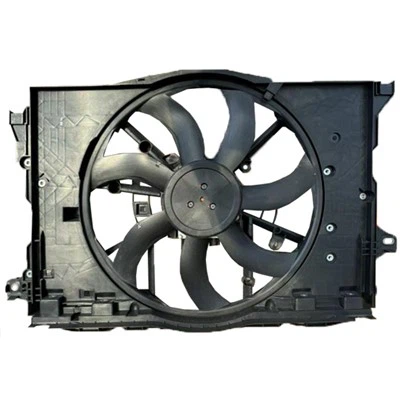
The radiator fan for mazda is the cooling fan for car or truck engines. It's usually used in vehicles with water-cooled engines and mounted between in front or behind the radiator. The car fan then pushes (or pulls) air through the radiator core, helping to cool the fluid circulating in the radiators tiny tubes.radiator cooling fans help to regulate engine temperature during specific situations. These include times when your car is moving slowly (below 25 mph) or when the engine is idling. The fans are, therefore, classified among the parts that make the engine cooling system.
When you drive a Mazda, you know how important it is to keep your car running smoothly. One part that often gets overlooked is the radiator fan. This little component plays a big role in keeping your engine cool. When it stops working correctly, it can cause all sorts of problems. So, how do you know when it’s time to replace your Mazda's radiator fan? Here are some common signs to look out for.
First, pay attention to your car's temperature gauge. If you notice that your engine is running hotter than usual, it could be a sign that your radiator fan is not working properly. The fan helps to cool down the engine, so if it's not doing its job, the temperature will rise.
Another clue is strange noises coming from your engine compartment.
If you hear a loud whirring or clicking sound, it might mean that the fan is struggling to work or that the motor is failing. Fans are generally pretty quiet, so any unusual noise is a red flag.You might also notice that your air conditioning isn’t as effective as it used to be. The radiator fan helps to dissipate heat from the AC system, so if it’s not functioning well, you might feel warmer air blowing into the cabin even when the AC is on full blast.
Sometimes, you might even see steam or smoke coming from under your hood. This is a serious sign that your engine is overheating and could be due to a faulty radiator fan. If you see steam, pull over immediately and turn off the engine to avoid severe damage.
If you experience frequent engine overheating or if your Mazda goes into "limp mode," it’s time to have the fan checked. Limp mode is a safety feature that limits your car’s speed to prevent further damage.
-
![Radiator Fan For Mazda Cx-3 2016-2018 PEHH-15-025]() Radiator Fan For Mazda Cx-3 2016-2018 PEHH-15-025Application: Automotive Cooling System. Product Name: Radiator Cooling Fan. Brand Name: Neutral. OEM: PEHH-15-025
Radiator Fan For Mazda Cx-3 2016-2018 PEHH-15-025Application: Automotive Cooling System. Product Name: Radiator Cooling Fan. Brand Name: Neutral. OEM: PEHH-15-025 -
![Radiator Fan For M3(HB) 13- PE20-15-025]() Radiator Fan For M3(HB) 13- PE20-15-025Application: Automotive Cooling System. Product Name: Radiator Cooling Fan. Brand Name: Neutral. OEM: PE20-15-025
Radiator Fan For M3(HB) 13- PE20-15-025Application: Automotive Cooling System. Product Name: Radiator Cooling Fan. Brand Name: Neutral. OEM: PE20-15-025 -
![Radiator Fan For CX-7 FAN ASSY L555-15-025A]() Radiator Fan For CX-7 FAN ASSY L555-15-025AApplication: Automotive Cooling System. Product Name: Radiator Cooling Fan. Brand Name: Neutral. OEM: L555-15-025A
Radiator Fan For CX-7 FAN ASSY L555-15-025AApplication: Automotive Cooling System. Product Name: Radiator Cooling Fan. Brand Name: Neutral. OEM: L555-15-025A -
![Radiator Fan For CX-5 FAN AASY 13-16 PE01-15-210]() Radiator Fan For CX-5 FAN AASY 13-16 PE01-15-210Application: Automotive Cooling System. Product Name: Radiator Cooling Fan. Brand Name: Neutral. OEM: PE01-15-210
Radiator Fan For CX-5 FAN AASY 13-16 PE01-15-210Application: Automotive Cooling System. Product Name: Radiator Cooling Fan. Brand Name: Neutral. OEM: PE01-15-210 -
![Radiator Fan For CX-4 FAN ASSY PEJC15025]() Radiator Fan For CX-4 FAN ASSY PEJC15025Application: Automotive Cooling System. Product Name: Radiator Cooling Fan. Brand Name: Neutral. OEM: PEJC15025
Radiator Fan For CX-4 FAN ASSY PEJC15025Application: Automotive Cooling System. Product Name: Radiator Cooling Fan. Brand Name: Neutral. OEM: PEJC15025 -
![Radiator Fan For MAZDA CX-8 2.5 PYFV-15-025]() Radiator Fan For MAZDA CX-8 2.5 PYFV-15-025HS-MZ-604. MAZDA CX-8 2.5. OEM:PYFV-15-025
Radiator Fan For MAZDA CX-8 2.5 PYFV-15-025HS-MZ-604. MAZDA CX-8 2.5. OEM:PYFV-15-025 -
![R-Fan for Premacy FP85-15-025A]() R-Fan for Premacy FP85-15-025AQ:Can you develop for me if I provide samples?A:If the sample you provide fits our marketing strategy, we can develop it for you for free.Q:Can you order the packing boxes for us?A:No problem.But the
R-Fan for Premacy FP85-15-025AQ:Can you develop for me if I provide samples?A:If the sample you provide fits our marketing strategy, we can develop it for you for free.Q:Can you order the packing boxes for us?A:No problem.But the -
![A/C Fan for Premacy FP85-15-035L]() A/C Fan for Premacy FP85-15-035LWe take part in various auto parts exhibitions every year. The following are some pictures of us and our customers.
A/C Fan for Premacy FP85-15-035LWe take part in various auto parts exhibitions every year. The following are some pictures of us and our customers. -
![Radiator Fan for Protege 1995-2009 ZL01-15-025B]() Radiator Fan for Protege 1995-2009 ZL01-15-025BOEM:ZL01-15-025BMaterial:PA66Warranty:12 months/3000 hours
Radiator Fan for Protege 1995-2009 ZL01-15-025BOEM:ZL01-15-025BMaterial:PA66Warranty:12 months/3000 hours -
![A/C Fan for Protege 1995-2009 FS2V-15-025]() A/C Fan for Protege 1995-2009 FS2V-15-025Each customer we have a professional staff to contact, they can be responsible for the processing of orders and after-sales service.
A/C Fan for Protege 1995-2009 FS2V-15-025Each customer we have a professional staff to contact, they can be responsible for the processing of orders and after-sales service. -
![Radiator Fan for Protege 2010-2014 PA10-15-025MI]() Radiator Fan for Protege 2010-2014 PA10-15-025MIAll the components of our products are manufactured by ourselves, and we use advanced rotor winding machines to ensure the quality of motors.
Radiator Fan for Protege 2010-2014 PA10-15-025MIAll the components of our products are manufactured by ourselves, and we use advanced rotor winding machines to ensure the quality of motors. -
![A/C Fan for Protege PA10-15-035MI]() A/C Fan for Protege PA10-15-035MIInsist on providing the best products and the most intimate service for our customers, we will continue to create a future hand in hand with the new and old customers.
A/C Fan for Protege PA10-15-035MIInsist on providing the best products and the most intimate service for our customers, we will continue to create a future hand in hand with the new and old customers.





Benefits of Radiator Fan For Mazda
Energy saving
Thermal efficiency can reach 99%. The radiator can be directly dissolved in water quickly and evenly. Even if the pressure difference between steam and the heated liquid is only 0.04 MPa, the steam can still be well added to the heated liquid, so the heat loss is small and the thermal efficiency is high.
Hot water temperature is high
Hot water with a higher temperature can be obtained using a vortex heater, with a heating temperature of 98°C in an open vessel and 150°C in a pressure vessel. The working pressure of the steam radiator is 1.6Mpa.
Small vibration
Low noise: Helps improve the surrounding environment. Compared with the old flower tube heater, the vortex muffler heater adopts an internal vortex muffler structure, the noise is lower than 50db, and the vibration is greatly reduced.
Low total investment
The heat source steam directly enters the water tank, which can save hot water equipment in the pump room and save investment.
Application of Radiator Fan For Mazda
Industrial equipment
Cooling fans are widely used in industrial equipment, such as machines, robots, automation equipment, etc. These equipment work in some harsh environments, such as oceans, coastal areas or chemical industrial areas, and require salt spray protection to protect the equipment from corrosion.
Automotive electronic equipment
Cooling fans are also used in automotive electronic equipment, such as on-board computers, audio, navigation systems, etc. Cars will go through various climates and road conditions while driving. Anti-salt spray treatment can protect car electronic equipment from being corroded by moisture, salt spray and other factors.
Military equipment
Cooling fans are also widely used in military equipment, such as fighter jets, warships, missiles, etc. When performing tasks at sea or in coastal areas, salt spray protection is required to ensure the reliability and durability of the equipment.
Outdoor electronic equipment
Cooling fans are commonly used in outdoor electronic equipment, such as solar panels, street lights, surveillance cameras, etc. These devices are often exposed to outdoor environments and are easily affected by factors such as moisture, salt spray, and ultraviolet rays. They require anti-salt spray treatment to extend their service life.
Medical equipment
Cooling fans are also used in medical equipment, such as electrocardiographs, monitors, etc. In some special environments, such as seaside resorts or offshore medical platforms, medical equipment needs to be treated with salt spray to protect the equipment from corrosion.
Types of Radiator Fan For Mazda
Mechanical radiator fan
Mechanical fans are engine-driven and normally mounted on the water pump pulley. The mechanical radiator fan is available in two major versions; clutch-based and flex. The clutch type uses a thermostatic clutch to engage and flywheel. The flex type, on the other hand, uses flexible blades that flatten at higher engine speeds or rpm to vary the amount of air blowing through the radiator.
Electric radiator fan
An electric radiator fan uses a dc motor and does not directly rely on the engine to run. To control the electric cooler fan motor, several components are necessary. They are relay, fuse, ecu, and sensors. The radiator fan relay switches on the power circuit. On the other hand, the radiator fan fuse protects the fan from power surges, while the ecm (or separate fan ecu) uses sensor data to control the motor operation.the electric radiator cooling fan does not take up a lot of space since it uses no pulleys or belts. It's also does not produce a drag on the engine as it runs on electricity.
Single radiator fan
A single fan uses a one-fan setup to push air through the radiator. Most vehicles use single radiator cooling fans. This configuration is usually sufficient for the cooling needs of most engines. A single cooling fan may not be adequate for some large or modified engines, though, and may lead to overheating problems.
Dual radiator fan
Dual fans are assembled in two's. They operate together to move air through the radiator core, providing a more effecting cooling effect. Dual radiator configurations are suitable for large engines that need a higher cfm rating. They are also used when the engine has been modified or when there are overheating issues.
Visually Inspect the Fan
The first step in testing your radiator fan is to visually inspect it. Start by opening the hood of your vehicle and locating the radiator fan. It is typically located near the radiator and can be recognized by its blades or fins.Examine the fan for any signs of physical damage, such as cracks or broken blades. Additionally, check for any obstructions that might be preventing the fan from spinning freely, such as debris or leaves. If you spot any damage or obstructions, they may be the cause of the fan not working properly.
Check the Fan Fuse
The next step in testing your radiator fan is to check the fan fuse. The fuse is a safety device that protects the electrical components of your vehicle from overload or short circuits. If the fuse related to the radiator fan is blown, the fan will not receive power and will not function.Locate the fuse box in your vehicle. It is typically located under the hood or inside the cabin. Consult your vehicle's manual to determine the exact location if you are unsure.
Testing the Fan Motor
After checking the fan fuse and ensuring it is not the cause of the issue, the next step is to test the fan motor itself. There are two common methods to test the fan motor: using a multimeter and a direct wiring test.
Mechanical vs. Electric Radiator Fan
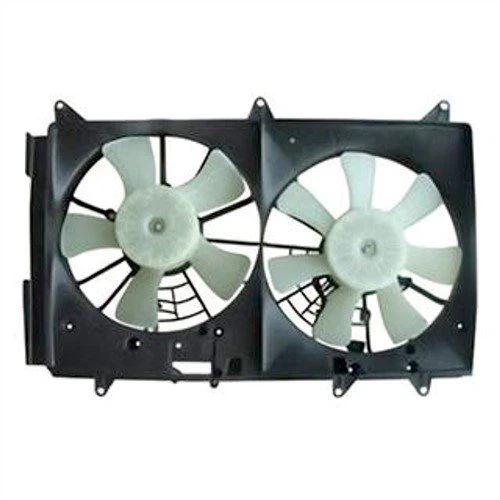
Mechanical cooling fans run off the engine's crankshaft and the electrical type off a 12V DC motor. The electric cooling fan is better in many ways. It can be set to rotate at any time and at the required speed, unlike the mechanical type.
Because electric car cooling fans do not spin with the engine, they produce a more consistent airflow and do not affect engine horsepower. Another advantage of electric radiator cooling fan types is their compactness. They can be installed in tight places, and even allow dual fan setups.
In conclusion, the best fans for cars today are electrical. They are more controllable, easy on the engine, and do not cause wear to the water pump. They're more expensive, though. If your stock cooling fan is mechanical, you could consider upgrading, although that would mean expensive modifications.
What causes Radiator Fan For Mazdas?
Blown Radiator Fan Fuse or Tripping Breaker
The fuse protects the fan's electrical system from power surges. As such, it's prone to blowing when current exceeds the specified amps. When you have a bad radiator fan, the fuse should be the first part to check. A blown fuse cuts off power to the motor, causing the following signs.
Bad Radiator Fan Relay
The radiator fan relay acts as a switch for the power intensive fan motor. Just like the fuse, the relay can get damaged due to overheating or age. Relay failure is also caused by a faulty control module or electrical problems. Bad cooling fan relay symptoms include.
Bad Radiator Fan Wiring
A radiator with electric fan cooling system also has cables and connectors to convey voltage and electronic signals. These wires can go bad over time, causing your electric cooling fan to show these symptoms.
Bad Temperature Switch, Control Module, or Sensors
Radiator fans are equipped with a temperature switch or electronic sensors to detect engine temperature and other data. If these components are not working, a cooling fan will not work correctly. Common symptoms include:Radiator cooling fan not working or one radiator fan not working if using a dual fan set up.
Radiator Fan For Mazda Repair Steps
Preparations
If the engine has been running, allow it to cool before attempting to work under the hood. Radiator fan repair involves touching parts of the engine or radiator, which can be too hot and lead to injury. To hasten the cooling, you may open the hood. Turn off the ignition too, and let the engine sit for at least half an hour.
Check the Fuse
Using your car manual, locate the radiator fan fuse. The fuse may have blown due to the motor drawing too much current. Inspect it for continuity or check for current on both sides of the wiring using a multimeter. If the fuse is not working, replace it. If in good condition, move to the next step.
Check the Temperature Switch or Sensors
The radiator fan repair process cannot be complete without testing the condition of the temperature switch or sensors. Simply unplug the switch or sensor and use jumper wires to connect the battery to the fan. This will bypass the component under test. If the fan comes on, replace the temperature switch or sensor.
Check the Relay
If every other component is working, the problem could be the relay. Again, use the manual to locate it. In many vehicles, the fuse relay is mounted in the fuse box. Test it for voltage using the multimeter. If you find it broken, install a new one. You can also avoid testing the relay by swapping it with a working one. The fan should come on. If it doesn't, the relay is not the reason for fan failure.
Check the Wiring
Inspect the fan wires for breakage, fraying, and connector corrosion or any other form of damage. Bad wires or connectors could be causing the motor to receive inadequate power and the reason for some of the “radiator fan not working” symptoms. Bad wiring could also cause the fan to rotate slower than normal.
How to Replace a Radiator Fan For Mazda
Step 1 Removal: How to Remove a Radiator Fan
Start by disconnecting the battery cables (negative cable first) and secure them by wrapping tape around the ends.Depending on your type of car, there may be hoses, brackets and other things obstructing the way to the fan assembly. Remove them.Disconnect and unplug the fan connector and remove any dirt and debris that may be covering it
Remove the fan assembly by taking out the mounting bolts.
Step 2 Installation: How to Install Radiator Fan
After you have removed the old and damaged radiator fan, it's now time to replace it. Compare the old and new fan to confirm the right model. The similarities to look for include shaft and blade size, connector type, and position of mounting holes.
Our Factory
Danyang Hongjiang Electric Co.,Ltd,which was originally built in 1995,is a specialized company in the development, manufacture and distribution of various heater assemblies and electric fan assemblies.Our company has two injection molding workshops, two motor assembly workshops and one assembly workshop.The blades, motors and shrouds of our products are all made by ourselves.At present, our production capacity can reach 1000 pieces per day.At present, the company has been able to produce more than 600 different types of electronic fan assemblies, covering most products of more than 30 internationally renowned automobile companies, including GM, Opel, Fiat, Toyota, Honda, Mazda, Mitsubishi, Hyundai and Kia,etc.


FAQ
As one of the most professional radiator fan for mazda manufacturers in China, we're featured by high quality products and good service. Please rest assured to wholesale radiator fan for mazda in stock here from our factory. Also, free sample is available for quality checking.
High Quality Radiator Fan For Honda, radiator fan for CX 5, PE01 15 210Popular Products