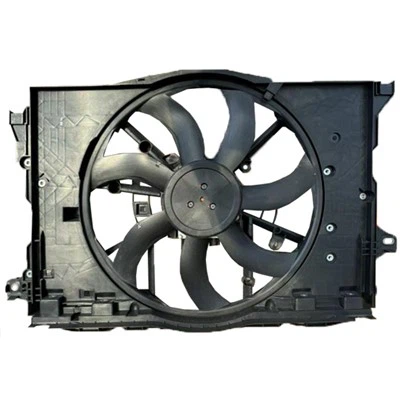
The Challenge of Bulk Buying Radiator Fans:
Let's face it, cost is a major factor. However, beyond just price, you likely have other concerns. Ensuring efficient operations and minimizing downtime for your vehicles is critical. You also want reliable parts that deliver consistent performance.
Why Consider Aftermarket Nissan Radiator Fans?
Here's where aftermarket Nissan radiator fans come in. They offer several key advantages:
- Cost Savings: High-quality aftermarket fans can offer significant cost savings compared to OEM options. This allows you to stretch your budget further, especially when purchasing in bulk.
- Wide Selection and Compatibility: With a variety of aftermarket fans available, you're more likely to find the exact fit for your specific Nissan models. This simplifies inventory management if you work on a range of Nissan vehicles.
- Performance and Efficiency: Some aftermarket fans are designed to meet or even exceed OEM specifications. This can translate to improved cooling performance, quieter operation, and even potential fuel savings for your Nissan fleet.
Choosing the Right Aftermarket Fan: Addressing Your Concerns
Of course, reliability is paramount.
Here's how reputable aftermarket brands address your concerns:
- Quality and Reliability: Rest assured, leading aftermarket manufacturers prioritize quality. They use high-grade materials and rigorous testing procedures to ensure their fans are durable and perform consistently. Many even offer warranties to back their products.
- Performance Matching: Aftermarket fans are engineered to match the original performance specifications of Nissan radiator fans. This guarantees proper cooling capacity and ensures your Nissan vehicles maintain optimal operating temperatures.
- Compatibility Guarantees: Many aftermarket suppliers offer compatibility guarantees. This eliminates any worries about selecting the wrong fan for your Nissan models.
Factory strength
Our company has two injection molding workshops, two motor assembly workshops and one assembly workshop.The blades, motors and shrouds of our products are all made by ourselves.At present, our production capacity can reach 1000 pieces per day.
Our Certificate
IATF16949
Production Market
Our products have been exported to more than 40 countries around the world, and we have established pleasant and stable cooperative relationships with many customers.
Competitive Price
We offer competitive pricing and are an attractive option for businesses looking to save money without sacrificing quality.
What is Radiator Fan For Nissan
As the name suggests, a Radiator Fan For Nissan is a small fan block that you can mount to - or under - your radiators. The fans blow hot air from the radiator into the room, spreading heat faster than the radiator normally would.This also means owners of radiator fans can expect returns on their initial investment of buying the fans. By helping you reduce gas consumption, using radiator fans will also help you save money. Besides, radiator fans increase comfort in your home by circulating hot air faster.
-
![Radiator Fan For NISSAN RICHIE 2013 21481-Y3000]() Radiator Fan For NISSAN RICHIE 2013 21481-Y3000FAQ Q: Do your products comply with international certification standards? A: Yes, our products meet the certification requirements of major markets, including international standards such as
Radiator Fan For NISSAN RICHIE 2013 21481-Y3000FAQ Q: Do your products comply with international certification standards? A: Yes, our products meet the certification requirements of major markets, including international standards such as -
![Radiator Fan For NISSA MURANO 2.5L/3.5L 2015-2019 21481-5AA1A]() Radiator Fan For NISSA MURANO 2.5L/3.5L 2015-2019 21481-5AA1AApplication: Automotive Cooling System. Product Name: Radiator Cooling Fan. Brand Name: Neutral. OEM: 21481-5AA1A
Radiator Fan For NISSA MURANO 2.5L/3.5L 2015-2019 21481-5AA1AApplication: Automotive Cooling System. Product Name: Radiator Cooling Fan. Brand Name: Neutral. OEM: 21481-5AA1A -
![Radiator Fan For Nissa Armada 5.6L 2005-2015 921202C20A CF23012 FA70252 921207S000 921209GA0A 92120ZJ00A 92120ZT00A DORMAN:620457]() Radiator Fan For Nissa Armada 5.6L 2005-2015 921202C20A CF23012 FA70252 921207S000 9212...Application: Automotive Cooling System. Product Name: Radiator Cooling Fan. Brand Name: Neutral. Material: PA66
Radiator Fan For Nissa Armada 5.6L 2005-2015 921202C20A CF23012 FA70252 921207S000 9212...Application: Automotive Cooling System. Product Name: Radiator Cooling Fan. Brand Name: Neutral. Material: PA66 -
![Radiator Fan For Nissa Pathfinder 4.0L 2005-2006 92120EA200 92120ZL00A 674-50244 92120ZP50A NI312010]() Radiator Fan For Nissa Pathfinder 4.0L 2005-2006 92120EA200 92120ZL00A 674-50244 92120Z...Application: Automotive Cooling System. Product Name: Radiator Cooling Fan. Brand Name: Neutral. OEM: 92120EA200 92120ZL00A 674-50244 92120ZP50A NI312010
Radiator Fan For Nissa Pathfinder 4.0L 2005-2006 92120EA200 92120ZL00A 674-50244 92120Z...Application: Automotive Cooling System. Product Name: Radiator Cooling Fan. Brand Name: Neutral. OEM: 92120EA200 92120ZL00A 674-50244 92120ZP50A NI312010 -
![Radiator Fan For Nissa Frontier/Xterra 2.5L/4.0L 2007-2019 92120EA200 92120ZL00A 674-50244 92120ZP50A NI312010]() Radiator Fan For Nissa Frontier/Xterra 2.5L/4.0L 2007-2019 92120EA200 92120ZL00A 674-50...Application: Automotive Cooling System. Product Name: Radiator Cooling Fan. Brand Name: Neutral. OEM: 92120EA200 92120ZL00A, 674-50244 92120ZP50A NI312010
Radiator Fan For Nissa Frontier/Xterra 2.5L/4.0L 2007-2019 92120EA200 92120ZL00A 674-50...Application: Automotive Cooling System. Product Name: Radiator Cooling Fan. Brand Name: Neutral. OEM: 92120EA200 92120ZL00A, 674-50244 92120ZP50A NI312010 -
![Radiator Fan For Nissa Sentra 1.6L/2.0L 1997-2000 214814B100 214818Z000 DORMAN:620431]() Radiator Fan For Nissa Sentra 1.6L/2.0L 1997-2000 214814B100 214818Z000 DORMAN:620431Application: Automotive Cooling System. Product Name: Radiator Cooling Fan. Brand Name: Neutral. OEM: 214814B100, 214818Z000
Radiator Fan For Nissa Sentra 1.6L/2.0L 1997-2000 214814B100 214818Z000 DORMAN:620431Application: Automotive Cooling System. Product Name: Radiator Cooling Fan. Brand Name: Neutral. OEM: 214814B100, 214818Z000 -
![Radiator Fan For Nissa Sentra 1.6L/2.0L 1991-1996 2148166R25 DORMAN:620430]() Radiator Fan For Nissa Sentra 1.6L/2.0L 1991-1996 2148166R25 DORMAN:620430Application: Automotive Cooling System. Product Name: Radiator Cooling Fan. Brand Name: Neutral. OEM: 2148166R25 DORMAN:620430
Radiator Fan For Nissa Sentra 1.6L/2.0L 1991-1996 2148166R25 DORMAN:620430Application: Automotive Cooling System. Product Name: Radiator Cooling Fan. Brand Name: Neutral. OEM: 2148166R25 DORMAN:620430 -
![Radiator Fan For Nissa 350Z 2007-2009 21481EV00A 21481EV02B DORMAN:621-160]() Radiator Fan For Nissa 350Z 2007-2009 21481EV00A 21481EV02B DORMAN:621-160Application: Automotive Cooling System. Product Name: Radiator Cooling Fan. Brand Name: Neutral. OEM: 21481EV00A, 21481EV02B, DORMAN:621-160
Radiator Fan For Nissa 350Z 2007-2009 21481EV00A 21481EV02B DORMAN:621-160Application: Automotive Cooling System. Product Name: Radiator Cooling Fan. Brand Name: Neutral. OEM: 21481EV00A, 21481EV02B, DORMAN:621-160 -
![Radiator Fan For NISSA ROGUE 2022-2023 21481-6RC0A]() Radiator Fan For NISSA ROGUE 2022-2023 21481-6RC0AApplication: Automotive Cooling System. Product Name: Radiator Cooling Fan. Brand Name: Neutral. OEM: 21481-6RC0A
Radiator Fan For NISSA ROGUE 2022-2023 21481-6RC0AApplication: Automotive Cooling System. Product Name: Radiator Cooling Fan. Brand Name: Neutral. OEM: 21481-6RC0A -
![Radiator Fan For Nissan Rogue 2021]() Radiator Fan For Nissan Rogue 2021Application: Automotive Cooling System. Product Name: Radiator Cooling Fan. Brand Name: Neutral. Material: PA66
Radiator Fan For Nissan Rogue 2021Application: Automotive Cooling System. Product Name: Radiator Cooling Fan. Brand Name: Neutral. Material: PA66 -
![Radiator Fan For NISSAN YD25 21476-2TB0A]() Radiator Fan For NISSAN YD25 21476-2TB0AApplication: Automotive Cooling System. Product Name: Radiator Cooling Fan. Brand Name: Neutral. OEM: 21476-2TB0A
Radiator Fan For NISSAN YD25 21476-2TB0AApplication: Automotive Cooling System. Product Name: Radiator Cooling Fan. Brand Name: Neutral. OEM: 21476-2TB0A -
![NISSAN NAVARA 06-14 COVER 21476-EB70A]() NISSAN NAVARA 06-14 COVER 21476-EB70AThe Nissan Navara 06-14 Cover is a top-of-the-line accessory for your pick-up truck. This cover is designed to provide practical function and stylish looks for your vehicle.
NISSAN NAVARA 06-14 COVER 21476-EB70AThe Nissan Navara 06-14 Cover is a top-of-the-line accessory for your pick-up truck. This cover is designed to provide practical function and stylish looks for your vehicle.


Beyond Replacement: Benefits for Bulk Buyers
The advantages extend beyond cost savings and performance:
- Streamlined Inventory Management: By purchasing in bulk, you can maintain a consistent stock of aftermarket Nissan radiator fans. This minimizes downtime by ensuring quick access to replacements whenever needed. No more waiting for individual orders and delaying repairs.
- Bulk Discounts and Long-Term Partnerships: Bulk purchases often qualify for significant discounts, further reducing your overall costs. Additionally, partnering with a reliable aftermarket supplier ensures a consistent source of high-quality parts and fosters a long-term relationship that can benefit your business.
Aftermarket Nissan radiator fans offer a compelling solution for bulk buyers. They combine cost-effectiveness with high quality, performance, and compatibility. By addressing your concerns about reliability and efficiency, aftermarket fans can become a valuable asset in maintaining a healthy and operational Nissan fleet.
Ready to learn more? Contact ustoday to discuss your bulk purchase needs and explore our selection of high-quality aftermarket Nissan radiator fans.
Energy saving
Thermal efficiency can reach 99%. The radiator can be directly dissolved in water quickly and evenly. Even if the pressure difference between steam and the heated liquid is only 0.04 MPa, the steam can still be well added to the heated liquid, so the heat loss is small and the thermal efficiency is high.
Hot water temperature is high
Hot water with a higher temperature can be obtained using a vortex heater, with a heating temperature of 98°C in an open vessel and 150°C in a pressure vessel. The working pressure of the steam radiator is 1.6Mpa.
Small vibration and low noise
Helps improve the surrounding environment. Compared with the old flower tube heater, the vortex muffler heater adopts an internal vortex muffler structure, the noise is lower than 50db, and the vibration is greatly reduced.
Low total investment
The heat source steam directly enters the water tank, which can save hot water equipment in the pump room and save investment.
Easy operation and maintenance
Water and steam are controlled separately, and the remaining cold water in the water tank can be heated repeatedly, making temperature control easy.
How Does a Radiator Fan For Nissan Work?
Overheating Engine
This is one of the most common indications of a faulty radiator fan. If the fan is not working properly, it won't cool the engine down, thus leading to high car temperature and, subsequently, engine damage.
Coolant Leaks
A failing fan can increase pressure in the cooling system, thus leading to coolant leaks.
Inadequate Cooling
If the fan is not operating properly, it will not be able to pass the necessary airflow that is required to cool down the radiator efficiently.
Types of Radiator Fan For Nissan

Mechanical Radiator Fans
Despite being an old design, it is still in use due to its efficiency. They are also much less complex and just require mechanical power to rotate them. It cools the coolant by either pushing or pulling the air in the radiator.

Electric Radiator Fans
Powered by the engine's electrical system rather than the engine, the electric radiator fan is a standalone divide that is mounted directly to the radiator for effective cooling. It can either be mounted at the radiator's front or back part along with the integrated fan shroud.
Here's how Radiator Fan For Nissan are used
More comfort in your home
You want to feel at home in your own house. Having each room at the exact desired temperature is a great step towards feeling more comfortable in your home. With radiator fans, heat gets circulated throughout the room faster, instead of remaining near the radiator. Hot air will also linger near the ceiling less.
Use less gas to reach desired temperatures
With radiator fans, your heating system needs to produce less heat and over a shorter period of time. This results in reduced gas consumption. Most governments are working hard to reduce gas consumption of the average household. Eventually, gas consumption should be reduced to the point where an average household doesn't use gas for heating anymore. As a society, we're moving towards green solutions as an alternative to gas. As long as radiators are present in the house, radiator fans work especially well with green heating solutions, such as a heat pump.
Lower boiler temperature
In an average home, the temperature of boiler is set to 80 – 85 °C. By spreading hot air more efficiently throughout your home, radiator fans allow you to set the temperature of your boiler much lower. Generally, when you use radiator fans on every radiator in your home, the temperature on your boiler can be set to about 60 °C. Depending on how well insulated your home is, it can be set even lower. This significantly reduces gas consumption by lowering the heating requirement and reducing losses within the system. Lower temperatures also mean that radiator fans are an ideal combination with a heat pump. Heat pumps are usually not capable of reaching temperatures as high as a boiler, but with radiator fans these high temperatures are no longer required.
What Are the Different Parts of a Radiator Fan for Nissan?
Fan Blades
The radiator fan blade keeps the engine cool by blowing air via the radiator. It can be made from varied materials like steel, aluminium, or plastic. The size of the blade may vary depending on the specific application.Further, the blade comes in two main shapes: curved and straight. Straight blades move more air but are noisier, while curved blades, generally made of plastic materials, straighten out at higher RPMs (Revolutions per Minute).
Fan Motor
One of the core components of the radiator fan, the motor, is primarily responsible for driving the blades to create airflow. Generally, the motor consists of the armature, permanent magnets, housing, brushes, and a commutator.
Fan Clutch
The radiator fan clutch is a part of mechanical cooling fans that are responsible for controlling the fan's operation. It serves to engage or disengage the fan as and when required. While various mechanisms are employed to achieve this, the two main types include thermal and non-thermal clutches.
Fan Shroud
Radiator cooling fans feature a shroud which is like a protective layer made of metal or plastic surrounding the fan assembly. It either comes attached to the fan or can be installed separately by the user. Its main task is to guide the airflow towards the radiator, thus preventing any wastage.
How to Choose Radiator Fan For Nissan
Establish the Need
If you haven't read our original post on mechanical and Radiator Fan For Nissan, start there. You'll learn that, in some cases, the stock clutch fan or an aftermarket flex fan will work just fine.Remember, though, a mechanical fan is driven by your engine. If your engine is spinning at low rpm, so is your mechanical fan—and that means there will be less airflow at lower engine speeds. If you notice your vehicle running a little hot in traffic or at low rpm, an auxiliary electric fan may be just what you need to give your primary fan a cooling boost.
Determine Optimum Airflow
Most aftermarket fan companies rate their electric fans by horsepower and airflow levels—simply choose the one that is rated the same as or higher than your vehicle's power output or airflow requirements.As a general rule of thumb, follow these minimum cubic feet per minute (cfm) ratings when using an electric fan as the primary cooling source on a basic engine:
1,250 cfm for a 4-cylinder
2,000 cfm for a 6-cylinder
2,500 cfm for a 8-cylinder
Measure It Up
Once you know the minimum cfm required, you need to determine what will physically fit. This is easiest to do if you remove the belt-driven fan and fan shroud so that you can accurately measure the radiator and the distance between the radiator and engine components.You should also measure the radiator core, which is the finned surface between the two tanks. You'll want to select a fan that covers as much of this space as possible. In many cases, you will be better off with a dual fan because the shroud will pull air through a larger area of radiator than a single fan.
Choose Pusher or Puller
Radiator Fan For Nissan are available in pusher or puller designs. Pusher-style fans mount on the front of the radiator and blow air through the radiator core. Puller-style fans mount behind the radiator and draw air through the core.Puller-style fans are recommended for applications in which the electric fan is the primary cooling source. A pusher-style fan can be used as an auxiliary cooling source, but you should sure make the fan covers as much of the radiator core as possible. This goes back to measuring and determining the right dimensions for your fan.
Step-By-Step Guide to Troubleshooting A Non-Functioning Radiator Fan For Nissan
Check the fuse
If the fuse is burnt, replace it with the same size and type. If it burns again, there's an excessive electrical draw or short.
Inspect the fan's condition
Any visible signs like broken blades indicate that a replacement is necessary.
Test the fan motor
Connect the motor directly to 12-volt power with jumper wires to see if the fan spins properly. If it doesn't, the motor is likely burnt out.
Check the coolant temperature sensor
A signal from the coolant temperature sensor is what triggers the ECU to turn on the radiator fan, and if it's faulty, it can prevent the fan from working at all.
Test the fan relay
Since the relay operates as a switch for the fan's power, a defective cooling fan relay won't energize the circuit. You can check it with a multimeter, or simply swap it with a known good relay to determine if it works.
Trace the wiring
A broken, shorted, or corroded wire anywhere in the circuits involved can prevent the fan from working.
How to Improve The Quality of Radiator Fan for Nissan?
Equipment parts
Generally, cooling fans are mainly assembled from four major parts: rotor, stator, frame, motor (motor) and other small parts. The quality of these equipment parts directly determines whether the cooling fan can operate normally. Therefore, to improve the quality of the cooling fan, we must first start with these parts. Only high-quality parts can make the cooling fan have a longer service life and better heat dissipation effect.
Department R&D
Usually, before a cooling fan is produced, it must be carefully designed and tested by the R&D department to ensure that all aspects of it meet production requirements and meet market demand. For example, when the internal structural parts and wind pressure speed of two cooling fans are exactly the same, different shapes of outer frames are used for testing. A well-designed outer frame can improve the performance of the fans by 20% compared with fans with ordinary outer frames. Or consider and test how much resistance and auxiliary force various frame shapes have on ventilation, how to minimize the bearing friction in the fan, how to use the chip to maximize the performance of the fan and ensure the safety of the fan, etc. This shows how important the research and development of a product is.
Production department
After the cooling fan design is completed, it can be put into production. A good production department can improve the quality of the entire product by about 40%, and a good production department can increase the shipping speed and save production costs. For example, with soldering, a skilled solder can often avoid the defective rate of fans and improve the stability of fans to a large extent.
Our Factory
Danyang Hongjiang Electric Co.,Ltd,which was originally built in 1995,is a specialized company in the development, manufacture and distribution of various heater assemblies and electric fan assemblies.Our company has two injection molding workshops, two motor assembly workshops and one assembly workshop.The blades, motors and shrouds of our products are all made by ourselves.At present, our production capacity can reach 1000 pieces per day.At present, the company has been able to produce more than 600 different types of electronic fan assemblies, covering most products of more than 30 internationally renowned automobile companies, including GM, Opel, Fiat, Toyota, Honda, Mazda, Mitsubishi, Hyundai and Kia,etc.


FAQ
As one of the most professional radiator fan for nissan manufacturers in China, we're featured by high quality products and good service. Please rest assured to wholesale cheap radiator fan for nissan in stock here from our factory. Also, free sample is available for quality checking.
High Quality radiator fan for Versa 2013, radiator fan for Bluebird 2005, High Quality radiator fan for N16 2000 2003Popular Products