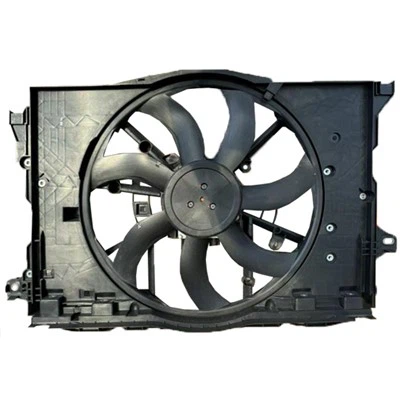
Infiniti, the luxury vehicle division of Japanese automaker Nissan, is renowned for its high-performance vehicles that beautifully blend style, comfort, and technology. One critical component that ensures the optimal performance of these vehicles, particularly in terms of engine cooling, is the radiator fan.
The radiator fan for Infiniti is designed to maintain the engine's temperature within the optimal range, preventing overheating and ensuring smooth, efficient performance. The fan accomplishes this by drawing cooler air across the radiator, which helps to dissipate the heat generated by the engine.
There are two types of radiator fans typically used in Infiniti vehicles: mechanical and electric. Mechanical fans, also known as belt-driven fans, are directly powered by the engine via a belt and pulley system. On the other hand, electric fans are powered by the vehicle's electrical system and are usually controlled by the engine control unit (ECU) or a thermostatic switch. Most modern Infiniti models are equipped with electric fans due to their efficiency and precise control.
The radiator fan's size and design are crucial as they directly impact its effectiveness in cooling the engine. Infiniti radiator fans are designed to fit perfectly within the engine bay, ensuring optimal airflow across the radiator. They are also balanced to reduce vibrations and noise, contributing to the quiet, comfortable ride that Infiniti vehicles are known for.
The fan's performance is directly linked to the vehicle's fuel efficiency. A well-cooled engine operates more efficiently, leading to better fuel economy. By maintaining the engine's temperature, the radiator fan also helps to extend the engine's life, avoiding costly repairs or replacements due to overheating damage.
What is Radiator Fan For Infiniti
Radiator fan for infiniti are a necessity for properly cooling vehicles during all conditions.they are a very simple component but are often overlooked and miss-understood. This blog post will go more in-depth with radiator fans; when/where they are beneficial, how they work in the overall cooling stack, common misconceptions, things to look out for, and more.In this blog post, we will be focusing on electric fans as that is what is typically used for sports cars.
-
![Radiator Fan For INFINIT M35 3.5L/M45 4.0L 2006-2010 21481EH11A FA70735 21481EH100 FA70683 DORMAN:621243]() Radiator Fan For INFINIT M35 3.5L/M45 4.0L 2006-2010 21481EH11A FA70735 21481EH100 FA70...1.We are the manufacturer and we can produce as long as you need.. 2.We have long experience in counter trade cooperation and are able to handle various emergencies.. 3.We can carry out independent
Radiator Fan For INFINIT M35 3.5L/M45 4.0L 2006-2010 21481EH11A FA70735 21481EH100 FA70...1.We are the manufacturer and we can produce as long as you need.. 2.We have long experience in counter trade cooperation and are able to handle various emergencies.. 3.We can carry out independent -
![Radiator Fan For INFINIT FX35/45 2003-2008 21481-CL80A 21486-AX000 21487-CL80A 21486CD000 21483-CG010]() Radiator Fan For INFINIT FX35/45 2003-2008 21481-CL80A 21486-AX000 21487-CL80A 21486CD0...1.We made the design according to the OE,meet the demand of aftermarket. 2.Our products have been tested by the market and meet the requirements of most markets. 3.Each of our components is
Radiator Fan For INFINIT FX35/45 2003-2008 21481-CL80A 21486-AX000 21487-CL80A 21486CD0...1.We made the design according to the OE,meet the demand of aftermarket. 2.Our products have been tested by the market and meet the requirements of most markets. 3.Each of our components is -
![Radiator Fan For INFINIT G35 G37 2008-2013 21481-JK60B]() Radiator Fan For INFINIT G35 G37 2008-2013 21481-JK60BApplication: Automotive Cooling System. Product Name: Radiator Cooling Fan. Brand Name: Neutral. OEM: 21481-JK60B
Radiator Fan For INFINIT G35 G37 2008-2013 21481-JK60BApplication: Automotive Cooling System. Product Name: Radiator Cooling Fan. Brand Name: Neutral. OEM: 21481-JK60B -
![Radiator Fan For NFINIT G20 2.0L 1999-2002 604-530785 214838E100 CF23031 FA70443 214871L000 214813J960 214861L010 214871L000 DORMAN:620435]() Radiator Fan For NFINIT G20 2.0L 1999-2002 604-530785 214838E100 CF23031 FA70443 214871...Application: Automotive Cooling System. Product Name: Radiator Cooling Fan. Brand Name: Neutral. Material: PA66
Radiator Fan For NFINIT G20 2.0L 1999-2002 604-530785 214838E100 CF23031 FA70443 214871...Application: Automotive Cooling System. Product Name: Radiator Cooling Fan. Brand Name: Neutral. Material: PA66 -
![Radiator Fan For INFINITI QX60 14-17/JX35 2013 21481-3JA0E]() Radiator Fan For INFINITI QX60 14-17/JX35 2013 21481-3JA0EApplication: Automotive Cooling System. Product Name: Radiator Cooling Fan. Brand Name: Neutral. OEM: 21481-3JA0E
Radiator Fan For INFINITI QX60 14-17/JX35 2013 21481-3JA0EApplication: Automotive Cooling System. Product Name: Radiator Cooling Fan. Brand Name: Neutral. OEM: 21481-3JA0E -
![Radiator Fan For INFINITI Q50 V37/Q50/VQ35 21481-4GA0A]() Radiator Fan For INFINITI Q50 V37/Q50/VQ35 21481-4GA0A1.We square measure the manufacturer and that we will manufacture as long as you wish.. 2.We have long expertise in counter trade cooperation and square measure able to handle varied emergencies..
Radiator Fan For INFINITI Q50 V37/Q50/VQ35 21481-4GA0A1.We square measure the manufacturer and that we will manufacture as long as you wish.. 2.We have long expertise in counter trade cooperation and square measure able to handle varied emergencies.. -
![Radiator Fan for Q50 2.0T 21481-4GCOB]() Radiator Fan for Q50 2.0T 21481-4GCOB1.We made the design according to the OE,meet the demand of aftermarket2.Our products have been tested by the market and meet the requirements of most markets3.Each of our components is manufactured
Radiator Fan for Q50 2.0T 21481-4GCOB1.We made the design according to the OE,meet the demand of aftermarket2.Our products have been tested by the market and meet the requirements of most markets3.Each of our components is manufactured -
![Radiator Fan for Q50 21481-4GA0A]() Radiator Fan for Q50 21481-4GA0A1.We are the manufacturer and we can produce as long as you need.2.We have long experience in counter trade cooperation and are able to handle various emergencies.3.We can carry out independent
Radiator Fan for Q50 21481-4GA0A1.We are the manufacturer and we can produce as long as you need.2.We have long experience in counter trade cooperation and are able to handle various emergencies.3.We can carry out independent -
![Radiator Fan for QX60 21481-3JAOE]() Radiator Fan for QX60 21481-3JAOEOEM:21481-3JAOEMaterial:PA66Warranty:12 months/3000 hours
Radiator Fan for QX60 21481-3JAOEOEM:21481-3JAOEMaterial:PA66Warranty:12 months/3000 hours


Low noise
The advanced technology and design used in the fan can effectively reduce the noise generated by the fan during operation. Typically, this type of fan will use higher quality motors and blades to reduce vibration and friction between the blades, thereby reducing noise levels.
Energy efficient
Adopt efficient motor and fan blade design to provide stronger air flow while reducing energy consumption. This means that a good quality fan can reduce energy consumption and electricity bills while providing a comfortable wind effect. It's important to wait.
Production department
After the cooling fan design is completed, it can be put into production. A good production department can improve the quality of the entire product by about 40%, and a good production department can increase the shipping speed and save production costs. For example, with soldering, a skilled solder can often avoid the defective rate of fans and improve the stability of fans to a large extent.
Intelligent control
Some cooling fans are equipped with intelligent control functions that can automatically adjust the wind speed based on ambient temperature, humidity and user needs. This can realize intelligent wind speed adjustment and provide better intelligent adaptation.
Safe and reliable
It has good safety performance and reliability, and adopts safety measures such as overheating protection, automatic power-off, stall protection, and anti-reverse connection protection to ensure safer use of the equipment.
Appearance design
The surface is smooth and burr-free, and the work is stable and low-vibration. It has obvious directions of rotation and installation direction. It uses better anti-seismic and anti-brittle materials. Special use environments such as anti-corrosion and waterproofing can be upgraded and processed.
Application of Radiator Fan For Infiniti
Computer cooling
Usually when we use a computer, there will be a cooling fan to dissipate heat for the computer CPU. This is one way to protect your computer. Because computers will generate heat when used for a long time, if the heat cannot be dissipated in time, it will cause the CPU temperature to be too high, causing automatic shutdown or blue screen of death, affecting normal use. In severe cases, it will burn out the CPU and increase the cost of repair parts.
Car cooling
A cooling fan will also be installed on the car. Because the car converts mechanical energy into thermal energy while driving, causing the internal temperature of the car to rise. In order to ensure that the parts in the car are not burned out, cooling fans need to be used to cool down and dissipate heat to ensure that the parts do not malfunction within the normal temperature range.
Industrial production
Generally, industrial-grade cooling fans are used in factory production equipment. Due to the production environment, many equipment work in workshops with high dust and poor ventilation. Long-term use will cause the device to accumulate a large amount of debris and dust, making it unable to dissipate heat effectively. The use of cooling fans can effectively solve these problems, cool down and remove dust from the equipment, enhance ventilation, and effectively extend the service life of the equipment.
Mechanical Cooling Fan
The mechanical cooling fan is mounted on the crankshaft pulley (usually the water pump pulley). When the car is idling or driving at low speeds, the fan is activated and blows air to the radiator. As the speed increases, the fan either stops spinning or slows down. This is done automatically through the control provided by the clutch. The clutch mechanism works by allowing grease expansion to activate the fan and vice versa, depending on engine temperature.
Electric Cooling Fans
Electric cooling fans have different functions. The switch can be electronically controlled, so no clutch is required. Fans receive power through a complex wiring system of relays, fuses, and cables. For automatic switching, the electric fan uses a temperature switch and a coolant temperature sensor. These sensors send signals to the car's computer to determine when to turn the fan on and off. Modern fans come with their own ECU or control module.
Single Radiator Fan
A single fan uses a one-fan setup to push air through the radiator. Most vehicles use single radiator cooling fans. This configuration is usually sufficient for the cooling needs of most engines. A single cooling fan may not be adequate for some large or modified engines, though, and may lead to overheating problems.
Dual Radiator Fan
Dual fans are assembled in two's. They operate together to move air through the radiator core, providing a more effecting cooling effect. Dual radiator configurations are suitable for large engines that need a higher CFM rating. They are also used when the engine has been modified or when there are overheating issues.
Radiator Fan For Infiniti Parts
Central hub
This is the part that contains the fan's drive components and, in some types of the fan, the clutch assembly
Fan blades
These are the arms that project from the hub. They are specially engineered to move air in the most efficient way possible
Support bracket
The bracket supports the fan assembly. It also allows for its mounting
Clutch
Found in older versions of the car engine fan, the clutch helps to engage and disengage the fan depending on the engine cooling demands. It can be thermally or electronically operated. Most are thermal
Motor
This part is only found in an electric radiator cooling fan. Its function is to power the fan. The cooling fan motor is usually rated 12v and the direct current type
Shroud
Some radiator cooling fans contain a shroud or housing around the blades and drive assembly. The housing helps to direct air for a more efficient cooling action
How to Choose Radiator Fan For Infiniti
Radiator Fan Types
Radiator cooling fans or engine cooling fans come in a wide range of styles, sizes, and more. When buying the component, it's necessary that you're aware of these fan types and the advantages or disadvantages of every option. With the information, you will easily find the best one for your type of car, or one that suits specific engine needs. The car radiator options available classified into the following types.
Based on the Method of Operation
Radiator Fan For Infiniti You will usually find it mounted on the car's water pump pulley. Its operation is controlled by a thermally operated clutch. When the coolant temperature rises, the thermal mechanism causes the fan to engage and vice versa. Some mechanical fans use flexible blades instead of clutch. The blades flatten at higher rpm to increase airflow and the opposite when temperature lowers.
Based on Blade Style
Radiator Fan For Infiniti. This blade style reduces the level of noise when the fan is working. The only disadvantage is that despite the quite operation, curved blades do not move a lot of air. As a result, these fan types do not suit highly demanding engines when it comes to cooling requirements.
Based on Setup
Radiator Fan For Infiniti– this configuration consists of two cooling fans working together. Dual cooling fans produce a stronger airflow, which makes them more effective. When one of them fails, the working fan helps to cool the engine until you can get the problem fixed. The dual setup is normally possible when using electric fan due to their compact nature. Also, when there's enough room for their installation.
How Does a Radiator Fan for Infiniti Work?
The importance of the Radiator Fan For Infiniti cannot be underestimated. Without it, your car engine would overheat, leading to many engine problems, among other issues. The fan supports the engine cooling system. It also turn on when you switch on the AC in your car, helping to regulator the temperature in the cabin.
Let's now see the fan cooling system works.
When your car engine is running, the reactions when fuel burns and the moving parts generate a lot of heat. The heat must be removed, or the engine will seize and get damaged or even blow up.
To remove the heat, different methods are used. The most common is circulating coolant. The heated coolant then goes to a component known as radiator where it loses heat.
The radiator contains narrow tubes that provide a large surface area for heat to escape. It also sits near the grille.
When your car is moving at speeds higher than 25mph, air enters through the grille, passing through the radiator core and helping the coolant in the tubes to lose heat.
When the speed drops below 25mph, such as when in traffic, there's not much air getting into the radiator. This is where the radiator fan comes in.
The radiator fan purpose during such situations is to ensure a constant airflow that helps to remove heat from the coolant before it goes back to the engine.
Radiator Fan For Infiniti Maintenance Tips
Your car Radiator Fan For Infiniti can last longer if you take good care of it. Follow these tips to prolong the fan's lifespan and reduce repair or replacement costs.
Always ensure the correct coolant level. If too low, the radiator fan works too hard and wears out too soon.
Observe the temperature gauge keenly. That way, you can easily tell when you have the radiator fan broken and respond early enough.
Regularly check for leaks in the cooling system. If you have a mechanical fan, a leaking clutch needs to be caught early or you may shorten the life of both the engine and fan.
Quickly replace faulty parts. If you have a now fuse, bad relay or any other parts, replace them as soon as you notice damage.
Avoid tampering with the fan wiring system. It could lead to shorting or current overload and a damaged or blown motor.
How To Detect a Radiator Fan For Infiniti
Diminished ac function
In most cases, a struggling radiator fan drains the ac fan's power causing poor functioning of the ac system. You can easily detect this if hot air comes from the vents when you turn on the ac.
Overheating engine
If the cooling fan doesn't function properly, it won't adequately cool the engine. Overheating could damage and even lead to the engine stalling. But, you can save extreme damage by pulling over and stopping the car engine if you notice a rise in the temperature gauge.
Noisy radiator fan
A breakage in the radiator assembly may cause unusual noise. It is advisable to master the normal functioning of your car and inspect it whenever you hear any sound that may raise a concern.
Illuminated engine warning light
If the engine control system detects a fault in the fan or any other component, it will turn on the warning light. However, you may need to check your car using a diagnostic system to identify the real problem.
Our Factory
Danyang Hongjiang Electric Co.,Ltd,which was originally built in 1995,is a specialized company in the development, manufacture and distribution of various heater assemblies and electric fan assemblies.Our company has two injection molding workshops, two motor assembly workshops and one assembly workshop.The blades, motors and shrouds of our products are all made by ourselves.At present, our production capacity can reach 1000 pieces per day.At present, the company has been able to produce more than 600 different types of electronic fan assemblies, covering most products of more than 30 internationally renowned automobile companies, including GM, Opel, Fiat, Toyota, Honda, Mazda, Mitsubishi, Hyundai and Kia,etc.


FAQ
As one of the most professional radiator fan for infiniti manufacturers in China, we're featured by high quality products and good service. Please rest assured to wholesale radiator fan for infiniti in stock here from our factory. Also, free sample is available for quality checking.
21481 4GCOB, 21481 3JAOE, radiator fan for QX60Popular Products