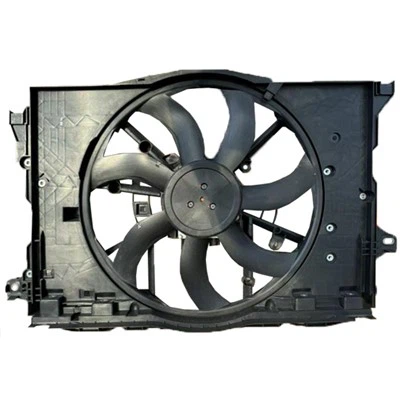
If you have ever looked under the hood and wondered why there are one or two large fans near the front of the engine, you are not alone. Many vehicle owners, workshop staff, and even first-time parts buyers often confuse radiator fans with condenser fans.
Although they look very similar, they serve different systems. This guide explains the difference in a simple, non-technical way-no engineering background required.

The One-Sentence Difference
Radiator fans cool the engine.
Condenser fans help the air-conditioning system stay cold.
That's the easiest way to remember it.
Where Are These Fans Located?
Inside the front of most vehicles, components are arranged in layers:
At the front: A/C condenser
Behind it: Engine radiator
Behind that: Engine
Fans are mounted next to these heat exchangers to move air through them when natural airflow is not enough.

What Does a Radiator Fan Do?
The radiator fan's job is to remove heat from the engine cooling system. When the engine temperature rises-especially in traffic or at idle-the fan pulls air through the radiator to keep the engine within a safe operating range.
If a radiator fan fails:
Engine temperature may rise quickly
Overheating warnings may appear
Continued driving can cause serious engine damage
This is why the radiator fan is considered a critical engine-protection component.
What Does a Condenser Fan Do?
The condenser fan supports the air-conditioning system. When the A/C is turned on, heat must be released from the refrigerant. The condenser fan helps push or pull air through the condenser so the cabin can cool efficiently.
If a condenser fan fails:
A/C performance drops
Cooling becomes weak in hot weather
Engine temperature is usually unaffected

A Simple Way to Tell Them Apart
Even without tools, you can often identify fan function by observation:
Turn on the air conditioner
→ If the fan starts immediately, it is likely serving the condenser
Wait for engine temperature to rise
→ Fans that activate later are usually linked to radiator cooling
Many modern vehicles use dual-function fan assemblies, meaning one fan performs both roles.
Why Many Cars Only Have One Fan Assembly
To save space and improve efficiency, manufacturers increasingly combine radiator and condenser cooling into a single fan assembly. This is why you often see product descriptions such as:
"Radiator & Condenser Cooling Fan Assembly"
This does not mean two fans-it means one engineered unit serving both systems.
Why Fan Assemblies Matter in the Aftermarket
In the aftermarket, cooling fans are rarely sold as individual motors or blades. Instead, they are supplied as complete assemblies to ensure:
Correct airflow direction
Proper mounting and alignment
Electrical compatibility
Reliable long-term performance
This approach reduces installation errors and return rates.

Our Role as a Cooling Fan Assembly Manufacturer
At Hongjiang Electric, we specialize in automotive cooling fan assemblies, not universal or standalone fan motors.
We design our radiator and condenser fan assemblies based on OE architecture, with a focus on:
Correct airflow performance
Vehicle-specific fitment
Installation efficiency for workshops
Stable quality for aftermarket distribution
Both brushed and brushless designs are available, and models for popular platforms-such as the Toyota Camry series-are among our strongest sellers.
Final Thoughts
Radiator fans and condenser fans may look alike, but their functions are very different. Understanding the distinction helps buyers, workshops, and distributors make better decisions-and avoid costly mistakes.
If you are sourcing complete cooling fan assemblies or evaluating aftermarket alternatives, working with an experienced manufacturer can make all the difference.
📩 For technical questions or bulk inquiries, feel free to contact our team.