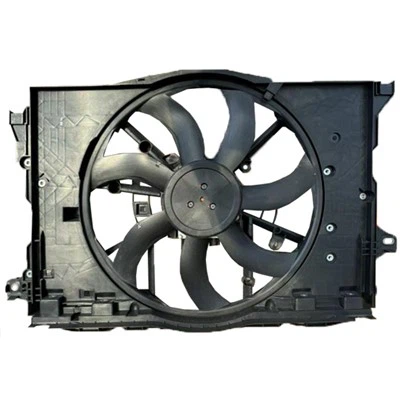
Sourcing radiator cooling fan assemblies for bulk orders is not just a pricing decision-it is a risk management decision.
For distributors, importers, and aftermarket brands, selecting the wrong manufacturer can lead to:
inconsistent product quality
delayed shipments
increased warranty claims
long-term damage to customer trust
This guide outlines a practical framework for evaluating radiator fan manufacturers before committing to large-scale orders.
1. Verify Manufacturing Capability (Not Just Trading Ability)
The first step is to determine whether the supplier is a real manufacturer or primarily a trading company.
A qualified radiator fan manufacturer should be able to:
produce fan motors or have stable motor supply partnerships
perform injection molding for blades and shrouds
assemble complete fan units in-house
explain their production process clearly
What to check:
factory photos or videos
production line details
ability to discuss technical specifications
Manufacturers with in-house capabilities generally provide better quality control and more stable supply.
2. Evaluate Motor Quality and Design
The motor is the most critical component of a radiator fan assembly.
Key questions to ask:
Are the windings made from pure copper or copper-clad aluminum (CCA)?
What type of bearings are used?
Is the motor designed for high-temperature environments?
Low-cost motors may reduce initial price but often lead to:
early failure
overheating
higher warranty rates
For bulk buyers, motor quality directly affects long-term cost.
3. Assess Material Selection for Fan Blades and Shrouds
The durability of a radiator fan depends heavily on the materials used.
Professional manufacturers typically use:
PA66 reinforced with glass fiber for fan blades
high-strength plastics for shrouds
You should confirm:
whether materials are new or recycled
the reinforcement ratio (e.g., GF30)
resistance to heat and long-term deformation
Material quality impacts not only lifespan but also noise, vibration, and airflow performance.
4. Check Quality Control and Testing Procedures
Reliable manufacturers follow structured testing processes before shipment.
Typical tests include:
vibration testing
noise testing
airflow performance testing
electrical performance checks
Ask the supplier:
What tests are performed on each batch?
Are tests documented?
How are defective units handled?
Consistent testing reduces the risk of field failures.
5. Review Product Development Capability
Bulk buyers often need more than standard catalog items.
A strong manufacturer should support:
development based on OEM numbers
sample-based replication
customization for specific markets
This capability allows you to:
expand your product line
respond to market demand quickly
reduce reliance on limited OEM supply
6. Evaluate Supply Chain Stability
A manufacturer's reliability depends on its upstream supply chain.
Key factors include:
stable suppliers for motors, bearings, and plastics
availability of safety stock for critical components
ability to handle demand spikes
Ask:
How do you manage raw material shortages?
Do you have backup suppliers?
How do you handle peak-season orders?
Strong supply chain management leads to consistent lead times.
7. Understand Lead Time and Production Planning
Lead time is often more important than price in bulk procurement.
Reliable manufacturers should provide:
realistic production schedules
transparent lead time commitments
flexibility for urgent orders
Avoid suppliers who promise unusually short lead times without explaining how they achieve them.
8. Analyze Export Experience and Communication
For international buyers, export experience is critical.
A qualified manufacturer should:
understand packaging requirements
provide clear documentation
communicate efficiently in English
respond quickly to technical inquiries
Good communication reduces misunderstandings and delays.
9. Request Samples and Pilot Orders
Before placing a large order, always validate the product.
Recommended steps:
order samples
test installation and performance
evaluate packaging quality
check consistency across units
A pilot order helps identify issues early and reduces risk.
10. Look Beyond Price: Evaluate Total Cost of Ownership
The lowest quotation is not always the best choice.
Consider the full cost, including:
product lifespan
failure rate
warranty claims
logistics efficiency
A slightly higher unit price can result in lower total cost if the product performs reliably.
A Practical Checklist for Buyers
Before placing bulk orders, ensure you can answer "yes" to the following:
Is the supplier a real manufacturer with proven production capability?
Are motor materials and design clearly specified?
Are fan blade materials suitable for high-temperature use?
Are testing procedures documented and consistent?
Is the supply chain stable and scalable?
Has the product been validated through samples or pilot orders?
A Note from the Manufacturer
At Hongjiang Electric, we support global distributors and aftermarket buyers with radiator cooling fan assemblies designed for consistent performance and reliable supply.
Our approach includes:
controlled material selection
structured testing processes
stable production planning
support for custom development
We work with partners who prioritize long-term reliability over short-term cost savings.