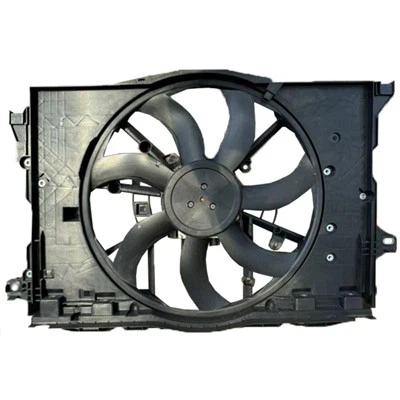
If you source radiator cooling fan assemblies regularly, you've likely seen it:
Two suppliers quote for the same application-yet one price is 30–50% lower.
At first glance, this looks like a cost advantage.
In reality, it often signals hidden risks inside the product.
For procurement managers and distributors, understanding why some quotes are unusually cheap is essential to avoid downstream costs such as failures, returns, and reputation damage.
1. Hidden Cost Reduction in the Motor
The motor is the most expensive and critical part of a radiator fan. It's also the easiest place to cut cost without obvious external differences.
Common shortcuts
Copper-Clad Aluminum (CCA) windings instead of pure copper
Lower-grade bearings
Reduced insulation class for high-temperature operation
What it leads to
higher electrical resistance
overheating under load
shorter lifespan
From the outside, these motors look identical-but performance differs significantly.
2. Lower-Grade Plastic Materials
Fan blades and shrouds are typically made from engineering plastics such as PA66 with glass fiber.
Low-cost alternatives may include:
recycled plastics
lower glass fiber content
inconsistent material quality
Risks
deformation under heat
increased vibration
noise issues
reduced airflow efficiency
These problems often appear only after installation, making them difficult to detect during purchasing.
3. Simplified or Skipped Production Processes
Manufacturing precision directly impacts product performance.
Some low-cost suppliers reduce costs by:
skipping dynamic balancing
simplifying assembly alignment
reducing process control
Consequences
unstable rotation
excessive noise
early component wear
These issues increase warranty claims and customer complaints.
4. Minimal or No Quality Testing
Testing is a hidden but essential cost in manufacturing.
Reputable manufacturers perform:
vibration testing
noise testing
airflow validation
electrical performance checks
Lower-cost suppliers may:
test only samples instead of full batches
skip certain tests entirely
Result
Inconsistent product quality across shipments.
5. Weak Supply Chain Control
Cheap quotes are sometimes the result of unstable upstream sourcing.
Examples include:
fluctuating material quality
inconsistent motor suppliers
lack of backup supply options
This can lead to:
quality variation between batches
unpredictable lead times
difficulty scaling production
6. Underpriced to Win Orders (Short-Term Strategy)
In some cases, suppliers intentionally quote below cost to:
win new customers
enter new markets
clear excess inventory
While this may benefit buyers in the short term, it often leads to:
later price increases
inconsistent quality
supply instability
What "Cheap" Really Costs
A lower unit price does not always mean lower total cost.
Hidden costs may include:
higher failure rates
increased returns and replacements
logistics and reordering costs
damage to customer trust
For distributors, these factors can quickly outweigh initial savings.
How to Identify a Risky Low Quote
Procurement managers should treat unusually low quotations as a signal to investigate, not an automatic advantage.

Key questions to ask
What material is used for motor windings (copper or CCA)?
What plastic grade is used for fan blades and shrouds?
Are full-batch quality tests performed?
How is rotor balancing handled?
Can the supplier explain their cost structure?
If answers are unclear or avoided, the risk level increases.
A Simple Rule for Buyers
If a quote is significantly lower than the market average, there is always a reason.
The question is whether that reason aligns with your business goals.
For aftermarket distributors, the best choice is often not the cheapest product, but the one that offers:
stable performance
predictable quality
consistent supply
A Note from the Manufacturer
At Hongjiang Electric, we focus on delivering radiator cooling fan assemblies that balance:
material quality
controlled manufacturing processes
reliable performance
stable long-term supply
We work with partners who understand that sustainable cost efficiency comes from consistency-not shortcuts.