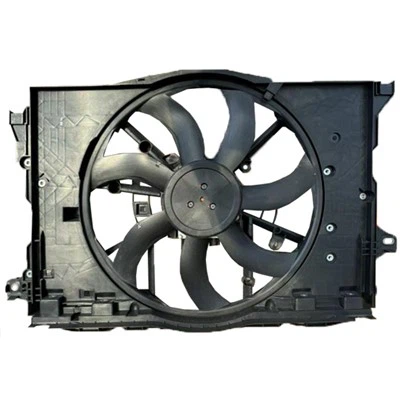
For many distributors and buyers, aftermarket radiator fans appear to come from a wide range of brands, trading companies, and suppliers around the world. Product catalogs list different logos, packaging styles, and pricing levels.
However, behind this apparent diversity lies a much more concentrated reality.

In practice, most aftermarket radiator cooling fan assemblies originate from a relatively small number of manufacturing clusters and production systems, with China playing a central role.
Understanding where aftermarket radiator fans really come from helps buyers make more informed sourcing decisions and avoid common misconceptions.
1. The Misconception: Many Brands, Many Factories
At first glance, the aftermarket appears highly fragmented:
multiple brands
different packaging
varying price points
numerous suppliers across regions
This often leads buyers to assume that each brand represents a different manufacturing source.
In reality:
Many aftermarket radiator fan brands source from the same underlying manufacturing ecosystem.
The difference is often not who makes the product, but how it is positioned, tested, and distributed.
2. The Reality: Concentrated Manufacturing Clusters
Most aftermarket radiator fans are produced in a few key regions with strong automotive component ecosystems.
China as the Primary Manufacturing Base
China has become the dominant source of aftermarket radiator fan assemblies due to:
integrated supply chains (motors, plastics, electronics)
large-scale production capacity
export-oriented manufacturing
ability to support OEM-based development
Major production clusters include:
Jiangsu (Danyang region) – strong in automotive assemblies
Zhejiang (Taizhou, Ningbo) – strong in motors and injection molding
Guangdong – export-driven manufacturing
These clusters enable manufacturers to produce complete fan assemblies efficiently and consistently.
3. The Role of OEM and Tier-1 Technology
While much aftermarket production happens in China, the original engineering concepts often come from:
Japanese OEM suppliers (e.g., Denso)
European engineering firms (e.g., Valeo, Mahle)
Korean thermal system suppliers
Aftermarket manufacturers typically:
study OEM designs
replicate structural and performance characteristics
adapt products for broader application coverage
This creates a system where:
Engineering may originate globally, but aftermarket production is highly centralized.
4. From Factory to Brand: How Products Are Repositioned
A single radiator fan assembly design may reach the market in multiple forms:
sold directly by the manufacturer
supplied to distributors under private labels
rebranded for regional markets
bundled into different product lines
This explains why:
identical-looking products may have different prices
the same OEM reference may appear under multiple brands
The differentiation often comes from:
quality control standards
material selection
testing procedures
after-sales support
5. Why Prices Vary for "Similar" Products
One of the most common questions from buyers is:
"Why do two radiator fans with the same application have very different prices?"
The answer lies in manufacturing decisions such as:
copper vs. copper-clad aluminum motor windings
reinforced vs. recycled plastic materials
full testing vs. minimal inspection
precision balancing vs. simplified assembly
These differences are often not visible in product listings but directly affect performance and lifespan.
6. The Importance of Manufacturing Transparency
Because many aftermarket products share similar external specifications, buyers must look beyond catalog descriptions.
Key evaluation factors include:
manufacturing capability
material transparency
testing processes
supply chain stability
A reliable supplier should be able to clearly explain:
how the product is made
what materials are used
how performance is validated
7. What This Means for Global Buyers
For distributors and procurement managers, the takeaway is clear:
The aftermarket radiator fan market is not defined by brand diversity, but by manufacturing discipline.
Choosing the right supplier is less about finding a brand name and more about identifying:
a stable manufacturing base
consistent quality standards
reliable supply capability
A Note from the Manufacturer
At Hongjiang Electric, we operate within one of China's core automotive manufacturing clusters, focusing on radiator cooling fan assemblies for global aftermarket partners.
Our approach emphasizes:
OEM-based structural design
controlled material selection
consistent production processes
stable export supply
This allows our partners to offer products that balance performance, cost, and long-term reliability.
👉 To better understand how radiator fans move through global supply chains, see our related guide:
Global Radiator Fan Supply Chain: How Cooling Fans Move from Factory to Aftermarket