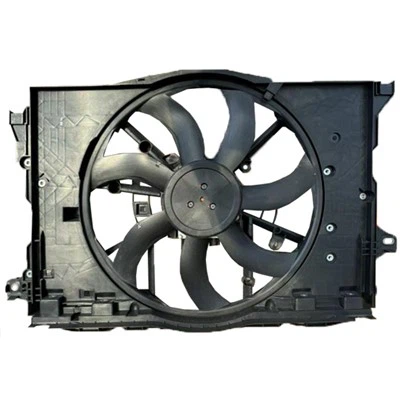
A typical question is:
"Why do quotes for the same radiator fan differ by 30–50%?"
The answer lies in the bill of materials (BOM), manufacturing processes, and quality controls behind each product.
Understanding the real cost structure helps procurement teams distinguish between:
reasonable cost optimization
hidden quality compromises
This guide breaks down the key cost drivers of radiator fan assemblies and provides practical insights for evaluating supplier quotations.
1. Motor Cost: The Largest Cost Driver
The motor is the core component of any radiator fan assembly and typically represents the largest portion of total cost.
Key Cost Variables
Copper windings vs Copper-Clad Aluminum (CCA)
Pure copper: higher conductivity, better durability
CCA: lower cost, higher resistance, shorter lifespan
Bearing quality
High-grade bearings improve durability
Low-cost bearings increase noise and failure risk
Motor design and insulation
High-temperature insulation increases reliability
Lower-grade insulation reduces cost but risks overheating
Industry Insight
Copper price fluctuations have a direct impact on motor cost. In recent years, increases in copper prices have driven some manufacturers to switch to alternative materials such as CCA to maintain competitive pricing.
This decision may not be visible in quotations-but it significantly affects long-term performance.
2. Fan Blade and Shroud Materials
Fan blades and shrouds are typically made through injection molding and are critical for airflow performance.
Material Differences
PA66 + Glass Fiber (GF30)
High strength and heat resistance
Maintains shape under long-term thermal stress
Lower-grade or recycled plastics
Lower cost
Reduced durability and stability
Cost Impact
Higher-quality materials increase upfront cost but reduce:
deformation under heat
noise and vibration
failure rates over time
3. Injection Molding and Tooling
Production quality is influenced by the molding process.
Cost Factors
mold precision and lifespan
cycle time
dimensional accuracy
High-quality molds:
produce consistent parts
reduce assembly issues
improve overall product reliability
Lower-cost molds may reduce initial investment but result in higher defect rates.
4. Electronic Control Components (If Applicable)
Modern radiator fans, especially brushless designs, include electronic control systems.
Cost Drivers
PCB quality and component grade
EMC (electromagnetic compatibility) design
heat dissipation design
Risk Factor
Low-cost electronic components may lead to:
unstable fan operation
electrical failures
compatibility issues with vehicle systems
5. Assembly and Process Control
The assembly process directly impacts product consistency.
Key Processes
rotor balancing
wiring integration
mechanical alignment
Skipping or simplifying these processes can reduce cost but increase:
vibration
noise
early failure
6. Quality Testing and Validation
Testing is often one of the most overlooked cost components.
Typical Tests
vibration testing
noise testing
airflow testing
electrical performance testing
Manufacturers who invest in testing typically deliver more consistent products.
Those who skip testing can offer lower prices-but at higher downstream risk.
7. Packaging and Logistics
Although smaller in proportion, packaging and logistics still affect total cost.
Considerations
protective packaging materials
export compliance
container utilization
Efficient packaging reduces shipping damage and improves logistics efficiency.
Cost Breakdown Overview
| Cost Component | Relative Impact | Key Risk if Reduced |
|---|---|---|
| Motor | High | Early failure, overheating |
| Materials (plastic) | Medium–High | Deformation, noise |
| Electronics | Medium | Electrical issues |
| Assembly process | Medium | Vibration, inconsistency |
| Testing | Medium | Quality instability |
| Packaging | Low | Shipping damage |
Why Some Quotes Are "Too Cheap"
Extremely low quotations are usually achieved through cost reductions in areas that are not immediately visible.
Common cost-cutting practices include:
replacing copper with CCA
using recycled plastics
skipping dynamic balancing
minimizing testing
While these measures reduce upfront cost, they often lead to:
higher failure rates
increased warranty claims
damage to brand reputation
How Procurement Managers Should Use This Information
When evaluating supplier quotations, procurement managers should focus on total value rather than unit price.
A strong sourcing decision is not:
"This is the cheapest option."
It is:
"This product balances cost, durability, and supply stability for long-term performance."
A Practical Supplier Evaluation Checklist
Before finalizing a supplier, ask:
What material is used for motor windings (copper vs CCA)?
What plastic materials are used for fan blades and shrouds?
What testing procedures are performed before shipment?
Are motors and electronics validated under high-temperature conditions?
How does the supplier ensure consistent production quality?
Clear answers to these questions indicate a more reliable manufacturing partner.
A Note from the Manufacturer
At Hongjiang Electric, we manufacture radiator cooling fan assemblies with a focus on:
controlled material selection
stable motor performance
structured quality testing
consistent supply for global buyers
We work with distributors and procurement teams who value predictable performance and long-term cost efficiency.
👉 For guidance on selecting the right supplier, see our related article:
How to Evaluate an Auto Radiator Fan Manufacturer Before Placing Bulk Orders