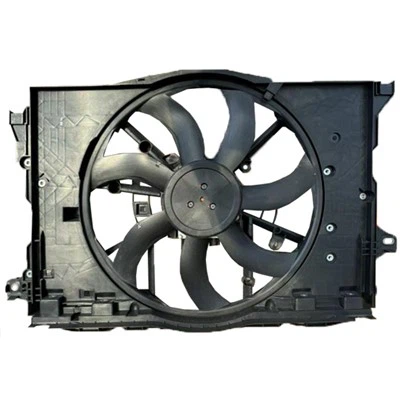
Can radiator fans get wet?
Radiator fans are near the front of the vehicle, often exposed to rain and splashes. But can they handle getting wet?
Radiator fans are designed to resist water exposure from rain and road spray but should not be submerged or exposed to high-pressure water, as this can damage electrical parts or cause corrosion.

It's important to know how much water exposure radiator fans can handle and how to protect them.
Is the radiator fan experiencing wobbling?
If your radiator fan shakes or wobbles when running, it might be a sign of trouble. How can you tell if your fan is wobbling?
Radiator fan wobbling occurs due to bent blades, loose mounting, or worn motor bearings, and it causes irregular movement that can damage the fan and create noise.

A wobbling fan is dangerous for the fan's health and can affect your vehicle's cooling ability. Common reasons include:
Bent or damaged blades: Impact from road debris or accidents can bend blades.
Loose bolts or mounts: If fan mounts aren't secure, the fan can move during operation.
Worn motor bearings: Bearings allow smooth rotation; when worn, they cause instability.
Checking for wobbling involves observing the fan while running. You might see the fan shake or hear unusual sounds.
Preventing wobble means inspecting the fan blades regularly and tightening or replacing mounts as needed.
Here's a quick comparison:
| Cause | Effect on Fan | Recommended Fix |
|---|---|---|
| Bent blades | Uneven spinning, wobble | Replace or straighten blades |
| Loose mounting | Fan shifts during rotation | Tighten or replace mounts |
| Worn bearings | Vibration and noise | Replace fan motor |
Can I straight wire my radiator fan?
Some suggest wiring the fan directly to the power source for simplicity. Is it safe to straight wire your radiator fan?
Straight wiring a radiator fan bypasses important controls like thermostats and relays, causing the fan to run constantly, which wastes power and can damage the fan or electrical system.
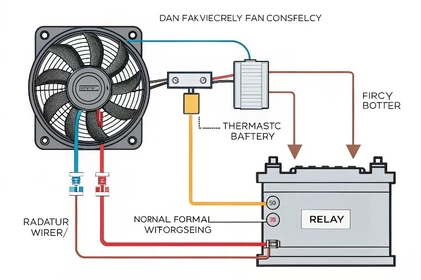
Connecting the radiator fan directly to the battery means it runs nonstop without temperature-based control.
Issues with straight wiring include:
Battery drain: Fan keeps running even when not needed, draining battery.
Overcooling: Engine may run colder than optimal, affecting performance.
Fan wear: Running constantly wears out the fan motor faster.
Lack of automatic control: The fan won't respond to engine temperature changes.
Proper radiator fan wiring includes:
A temperature switch or sensor to signal when the fan should run.
A relay to control the high current to the fan motor.
Fuses for safety.
Following vehicle wiring guides or professional installation ensures proper cooling and protects electrical components.
| Wiring Type | Fan Operation | Pros | Cons |
|---|---|---|---|
| Straight wired | Continuous running | Simple setup | Battery drain, fan wear |
| Controlled wiring | Runs only when engine hot | Efficient, protects parts | More complex install |
Which is better pusher or puller radiator fan?
When choosing a radiator fan setup, should you go for a pusher or puller type? What's the difference and which works better?
Puller fans mounted behind the radiator pull air through it and generally cool better; pusher fans mounted in front push air through. Pullers are preferred for efficiency, but pusher fans have installation advantages.

Understanding how the two fans differ helps make the best choice:
| Fan Type | Position | Cooling Method | Advantages | Drawbacks |
|---|---|---|---|---|
| Puller | Behind radiator | Pulls air through radiator | More efficient cooling, less noise | Can be harder to install in tight spaces |
| Pusher | In front of radiator | Pushes air through radiator | Easier to fit, can cool other parts | Less efficient, more noise possible |
Puller fans work by creating negative pressure that draws cool air through radiator fins, enhancing heat exchange.
Pusher fans force air across radiator, effective at low speeds or when cooling additional components like AC condensers.
In many vehicles, a puller fan setup gives better cooling performance, especially at highway speeds.
Choosing depends on space, cooling needs, and vehicle design.
Conclusion
Radiator fans tolerate water splashes but avoid full wetting. Wobbling means mechanical issues. Straight wiring causes problems. Puller fans usually cool more efficiently than pushers.