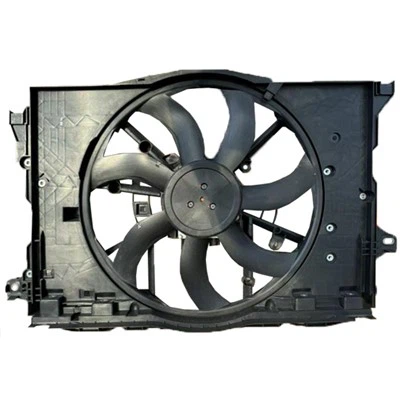
Is a radiator fan with a low amp draw something to be happy about, or should you be worried?
A low amp draw in a radiator fan isn't always bad news. It often means the fan is efficient. However, it could also point to problems like weak airflow or faulty sensors.

It's not always straightforward to understand amp draw. Let's look closer, so you can understand what to look for.
How Many Amps Does a Radiator Fan Pull?
Are you wondering if your radiator fan is using the right amount of power?
The amps a radiator fan pulls varies. It depends on its size and design. Most fans draw between 5 and 15 amps. High-performance fans might pull more.
The exact number of amps depends on several things. Small, standard fans in older cars usually use less power. Bigger, more powerful fans, or those in newer vehicles with more complex cooling systems, will use more.
For example, an older car with a simple cooling system might have a fan that draws around 5 amps. A modern car with a turbocharger or a larger engine might have a fan drawing closer to 10-15 amps. It's not just about size or engine type. Fan design plays a big part too. A well-designed fan with efficient blades will move more air using fewer amps.
I started Hongjiang Electric back in 1995. I always focused on making our fans efficient. We aim for high-performance cooling but at a lower amp draw than others. For example, some of our fans offer cooling that's just as good as the competition, but they use 30% fewer amps.
Also, newer technologies like brushless motors are changing things. These motors are more efficient. So, a new fan with a brushless motor might draw fewer amps than an older one and still provide better cooling.
Why Is My Radiator Fan Motor Running Slow?
Do you suspect your radiator fan is not running at full speed?
A slow-running radiator fan could be due to a few reasons. Common causes include a failing motor, low voltage, or a blocked fan. A faulty temperature sensor could also be the culprit.

When a radiator fan motor 1 runs slow, it can cause a chain of problems. The most obvious is that your engine might overheat. If the fan isn't pulling enough air, the radiator can't cool the coolant properly. This is really important if you're towing something or driving in hot weather.
Another thing to consider is the wiring. Over time, the wires that supply power to the fan can get worn out. This leads to a voltage drop2. That means the fan isn't getting the power it needs to run at full speed.
Also, think about the fan motor itself. Like any motor, it can wear out over time. The bearings might get stiff, or the windings inside could start to fail. I've seen this happen a lot over the years. A failing motor won't draw the right amount of power, and that can make the fan run slow.
At Hongjiang Electric, we focus on making durable fans. We use quality components that last. But even the best parts can wear out eventually. That's why it's important to check your fan regularly.
Don't forget about the temperature sensor. This sensor tells the fan when to turn on and how fast to run. If it's faulty, it might not be sending the right signals. This can cause the fan to run slow, or not at all.
[1]Understanding the common issues with radiator fan motors can help you prevent overheating and ensure your vehicle runs smoothly.
[2]Learning about voltage drop can help you diagnose electrical issues in your vehicle, ensuring all components function properly.
Radiator Fan Not Working? Check the Amps!

Is your radiator fan not working at all, and you're not sure where to start?
If your radiator fan isn't working, checking the amps is a good first step. Use a multimeter to see if the fan is drawing the correct amount of current. If it's drawing too little or none, there's likely a problem.
When a radiator fan stops working, it's often an electrical issue. That's why checking the amps is so important. If the fan is drawing zero amps, it could mean a blown fuse, a broken wire, or a completely dead motor.But, it's not always that simple. Sometimes, the fan might be drawing some amps, but not enough. This could mean the motor is struggling, or there's a problem with the fan blades. They might be jammed or damaged, which makes the motor work harder and draw more amps than it should.
I've seen cases where a low amp draw actually pointed to a bigger problem. For example, a faulty sensor might be misreporting the amp draw. Or, there could be a voltage drop in the wiring system. This is more common in older vehicles with aging wiring.If you're working on an electric vehicle (EV) or a hybrid, low amp draw1 can be a selling point. These vehicles need to save battery life. So, a fan that cools efficiently but uses fewer amps is a big advantage. We design some of our fans specifically for EVs. They maintain the right coolant temperature while using less power. For example, one of our EV fans maintains a coolant temp of 95°C at just 8A, while the industry standard is 12A.
[1]Understanding low amp draw can help diagnose potential issues with radiator fans, ensuring efficient vehicle performance.
When you check the amps, also consider any certifications the fan has. Certifications like SAE J1394 or ISO 9001 give you confidence in the fan's safety and reliability.A low amp draw isn't always bad. Just make sure you check for any hidden problems.