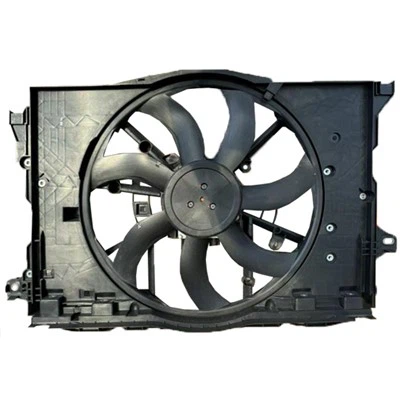
Radiator fans, also known as cooling fans, play a crucial role in the vehicle's cooling system. Their primary function is to provide adequate airflow across the radiator when the vehicle isn't moving fast enough to produce it. Here's a detailed explanation of how they work:
1. Activation of the Radiator Fan: The radiator fan's operation is controlled by the engine control unit (ECU) or a thermostatic switch. When the coolant's temperature rises beyond a preset level, the ECU or thermostatic switch activates the radiator fan. The fan also typically comes on when the air conditioning is turned on, irrespective of the engine temperature, to ensure the engine doesn't overheat.
2. Mechanical Fans: Older cars usually have mechanical or belt-driven fans. These fans are directly driven by the engine through a belt and pulley system. They are attached to a fan clutch which, using a temperature-sensitive spring, engages or disengages the fan depending on the engine's temperature. When the engine is cool, the fan clutch partially disengages the fan to save power. As the engine's temperature rises, the fan clutch fully engages the fan.
3. Electric Fans: Modern vehicles mostly use electric fans, which are powered by the vehicle's electrical system. They require less power to operate and can be controlled more precisely than mechanical fans. The ECU regulates the fan's operation based on the coolant's temperature, vehicle speed, AC pressure, and ambient temperature. Electric fans can operate at various speeds, providing only the necessary cooling, which improves fuel economy and reduces noise.
4. Airflow Across the Radiator: Once activated, the radiator fan draws cooler air through the vehicle's radiator. The cool air absorbs the excess heat from the coolant that has been circulated through the engine, thereby reducing its temperature. The cooled coolant is then recirculated back into the engine, keeping the engine from overheating.
5. The Fan's Deactivation: Once the coolant's temperature drops to the desired level, the ECU or thermostatic switch deactivates the fan until the temperature rises again.
Through this cyclic process, radiator fans ensure that the vehicle's engine operates within the optimal temperature range, preventing overheating and potential damage to the engine components. It's a crucial system that requires regular maintenance to ensure your vehicle operates efficiently and safely