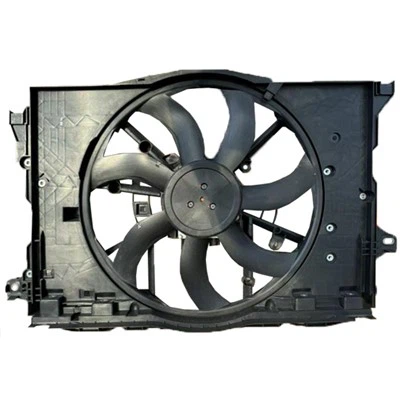
When browsing radiator fan assemblies online, you may notice two key specifications: Vehicle Fitment and Interchange Data.
Both describe compatibility - but they come from different technical systems.
Understanding them helps you choose the right fan assembly quickly and confidently.
What Is Vehicle Fitment?
Vehicle Fitment describes the specific vehicles, years, and engine types that a fan assembly is designed to fit.
For example:
Toyota Camry 2017–2019 2.5L
This information is derived from databases such as AutoCare ACES, TecDoc, or official OEM catalogues.
Note:OEM Official EPC (Electronic Parts Catalogue) Major automakers all have official EPC systems (authorization or subscription required).
It's mainly used to ensure the right fitment during replacement and helps technicians or distributors verify compatibility by model and year.
In short, Vehicle Fitment answers the question:
Which vehicles can use this fan assembly?
What Is Interchange Data?
Interchange Data lists the OEM part numbers that the product can replace or cross-reference.
For instance:
Interchange Part Number: F2GZ-8C607-E
This number is the original manufacturer's code (in this case, Ford), used in their official parts catalogues.
Professional buyers or workshops(Large wholesalers, repair shops, and exporters ) often order by OEM reference number, so Interchange Data is essential for accuracy.
In short, Interchange Data answers the question:
Which original part numbers does this fan replace?
Vehicle Fitment vs. Interchange Data
| Category | Type of Information | Purpose |
|---|---|---|
| Vehicle Fitment | Model + Year + Engine | Shows which cars the fan fits |
| Interchange Data | OEM / Cross Reference Numbers | Matches original part numbers |
For example, one of our assemblies may fit:
Toyota Camry 2017–2019 / Avalon 2016–2018 / Lexus ES 2016–2018
and interchange with:
OEM Numbers 16363-0V120, 16363-0V121
This means it's designed according to OE specifications, but optimized to fit multiple OE references, meeting real aftermarket demand.
The Interchange Data column gives you flexibility: you can cover more SKUs, reduce inventory by stocking one part that replaces multiple older part numbers, and respond to different vehicle models using one part number.
For example: if your cooling fan listing shows Camry 2017-2019 in the fitment column, and interchange numbers include part numbers for Avalon 2016-2018 or Lexus ES 2016-2018, you know that one fan assembly may cover all these applications. That means fewer SKUs and easier logistics for you.
What "Meet the Demand of Aftermarket" Really Means?
When we say:
"We made the design according to the OE, meet the demand of aftermarket."
It means our products are:
Manufactured based on original OE standards for perfect fit and performance;
Compatible with multiple OE references, allowing distributors to stock fewer SKUs;
More cost-effective than genuine parts while maintaining equivalent functionality and reliability;
Ready for the global aftermarket - easy to order, install, and replace.
Where to Verify the Data?
Aftermarket cross-databases (authorization or subscription required):
include: AutoCare ACES/PIES data (North American standard), TecDoc (European standard), and online platforms such as ShowMeTheParts, PartsLink, RockAuto, NAPA, and Advance Auto Parts, which match OEM part numbers, replacement part numbers (Aftermarket P/N), and vehicle fitment.
You can verify Vehicle Fitment and Interchange Data from the following trusted sources:
Official OEM parts websites: FordParts.com, ToyotaParts.com
Aftermarket databases: AutoCare ACES/PIES, TecDoc
Professional distributors: RockAuto, TYC Americas