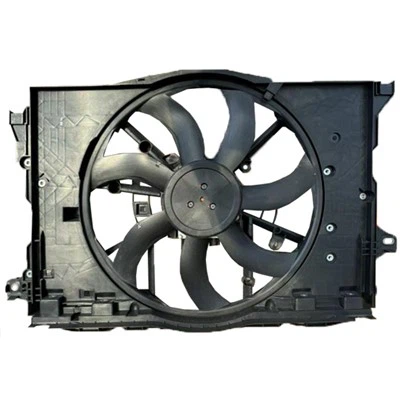
When making big horsepower on the street, keeping your engine cool is essential. Sitting in heavy traffic with a high horsepower engine, a mechanical fan just won't cut it. Mechanical fans rely on engine RPM and when sitting at idle, they just don't spin fast enough to keep your engine cool. Mechanical fans also rob your engine of horsepower and fuel economy since they are driven off the crankshaft. They simply can't compete with electrical fans when it comes to efficiency. A radiator only works if there is airflow through the radiator core. An electrical fan provides constant airflow even when the engine is idling when your engine needs it the most. And since they are electric, they do not affect engine horsepower or fuel economy. When choosing an Electric Radiator Fan , here are a few factors you should be aware of.
Electrical Fans
Electrical fans can either push air through the radiator or pull air through it. A pusher fan sits in front of the radiator. When a vehicle is moving, a pusher fan can obstruct airflow due to it's positioning in front of the radiator. A puller fan, on the other hand, sits right behind the radiator, it pulls through and has less impact on airflow at high speeds than a pusher fan since it sits behind the radiator.
Puller fans provide more cooling capacity than pusher fans. The determining factor on whether to use a puller fan or a pusher fan is the amount of room that you have. Always choose a puller fan, but if space is an issue then use a pusher fan. When it comes to diameter, you should get a fan that covers as much of the radiator core as possible.
Measure the area with an existing fan and shroud removed to find out how much room you have to work with. larger fans will keep your car idling in the heat for a lot longer period of time without overheating. Always allow some clearance between the fan motor and the engine. You do not want these parts touching each other.
Clearance
Most of the time a single fan is all you need, but if you have added a much larger engine or are making big horsepower, then you may want dual fans to maximize the amount of airflow. If you're not having a problem with overheating, then a single fan will suffice, but if you have made big, significant upgrades, such as a turbo or a supercharger, then dual fans will help provide the additional airflow needed.
Blades
Straight and curved fan blades come down to a difference in noise vs airflow. Straight blades move more air but are more noisy. On the other hand, curved blades are quieter but don't move as much air so it all depends on your application. If you desire a more quiet fan, then the curved blade is the way to go, but if you need all the airflow possible, then go for the straight blades.

Fan Shroud
To get maximum airflow through the radiator core, you should use a fan shroud. A fan shroud ensures the air is moving through the radiator core and not around it. A radiator is useless without airflow, a fan shroud helps direct air flow through the core. Whether it be plastic or aluminum, make sure you use one in your vehicle.
CFM
Manufacturers rate fans by CFM, CFM stands for cubic feet per minute so an electrical If you are using a turbocharger, supercharger, or have a large engine, then you will want the maximum CFM fan available. When a max airflow fan does not provide enough cooling for you and you have taken into account all factors mentioned here, then you might consider looking into a larger radiator. Another factor to look at is the current draw.
The more current the fan draws, the more airflow it will have.
A more powerful electrical fan can draw air through multirow, radiator, and air conditioning cores. Be sure to use a relay kit when wiring an electric fans. We have relay kits designed to intergrate with OEM wiring. Choose a relay kit with or without a stainless steel electronic sending unit.
Sending units offer hands free control of your electric fans, simply choose a sender with an on/off temperature that best fits your needs. By taking into account these simple points, choosing the right electric fan for your vehicle will be straight forward and keep your engine happy for years to come.